
Australia’s largest single commercial shipment of sustainable aviation fuel has been jointly secured by the Qantas Group, Sydney Airport, energy company Ampol and partners in the airline’s SAF coalition, marking a significant milestone in decarbonising the nation’s air services. A consignment of unblended SAF totalling almost 2 million litres has been imported from Malaysia to Ampol’s Kurnell refinery in Sydney, to be blended with conventional jet fuel ahead of testing, certification and delivery to the airport, Australia’s biggest and busiest air hub. The SAF will be blended at a ratio of approximately 18%, which Qantas estimates could be used to help power the equivalent of 900 narrowbody jet flights between Sydney and Auckland, New Zealand, cutting aircraft carbon emissions by around 3,400 tonnes.
The SAF importation comes as demand intensifies in Australia and the wider Asia-Pacific region for lower emission air transport and greater development and deployment of SAF.
For Qantas, a leading advocate of both SAF use and production in Australia, the Ampol shipment highlights both ambitions. “As the national carrier, we have a role to play in reducing the impact of air travel on the environment,” said the airline group’s CEO Vanessa Hudson. “But we can’t do it alone.”
The company has five core airline units – Qantas International, Qantas Domestic, QantasLink, Qantas Freight and low-cost division Jetstar – and is pursuing net zero carbon emissions by 2050. To support this ambition, it is targeting 10% SAF use by 2030 and around 60% by 2050. It already sources SAF at London’s Heathrow Airport for its nonstop flights to Singapore and Perth and is exploring opportunities to load SAF in other locations.
“The creation of a domestic sustainable aviation fuel industry is key to our efforts towards the decarbonisation of aviation, increasing Australia’s fuel security and creating thousands of new jobs across our economy,” said Hudson.
“We pick up 70% of our fuel in Australia so we’re looking forward to working closely with the government to chart the next course for SAF in Australia. The alignment of industry and government will be critical to establishing and scaling an industry here.”
Qantas and other partners are already backing projects including biofuel plants in Queensland and New Zealand, and a feedstock study in Western Australia. Together with Airbus, it also recently announced an investment in a venture capital fund focused on climate-based initiatives.
Additionally, the Qantas SAF Coalition, established by the airline in 2023, comprises 15 Australian and global companies which support the use of SAF to help reduce the flight emissions generated by their business travel and freight movements, while also driving up demand for and production of the fuel.
The CEO of Sydney Airport, Scott Charlton, said his gateway consumed almost 40% of the nation’s aviation fuel and had a big opportunity to drive the establishment of a local SAF production sector. The airport is aiming for SAF to comprise 50% of its total jet fuel usage by 2050.
Charlton said the state of New South Wales, of which Sydney is the capital, was a major producer of fuel feedstocks such as canola and “uniquely placed to develop this industry.”
“Most of Australia’s canola harvest currently goes offshore to be turned into biofuels by other nations,” he said. “With the right policy setting at a state and federal level, and governments working in partnership with industry, NSW can become a global leader on SAF, creating local jobs, supporting local industry and fuelling more sustainable flights in the future.”
A SAF policy analysis prepared in 2023 by global consultancy ICF on behalf of Qantas and Airbus estimated that a domestic SAF production sector could add up to A$13 billion (US$8.4bn) to Australia’s GDP by 2040, supporting almost 13,000 jobs in the feedstock supply chain and creating 5,000 new roles in constructing and running the plants.
Ampol’s Managing Director and CEO, Matthew Halliday, said the shipment from Malaysia – details of which were not disclosed – was his company’s “first major import of sustainable aviation fuel into Australia and leverages our advanced supply chain infrastructure to deliver this product directly from a key domestic fuel terminal to the nation’s busiest airport.”
He said the initiative also progressed Ampol’s ambition to establish domestic renewable fuel capability at the company’s Lytton Refinery in Brisbane.
Australia Post is a key member of the airline’s SAF Coalition, as well the largest domestic partner of Qantas Freight.
“The SAF Coalition was established to enable large entities like Australia Post to take real and tangible action toward reducing our Scope 3 emissions, acknowledging we have a role to play in supporting the decarbonisation of transport industries,” said Mark Davies, the organisation’s General Manager, Premium Services and International.
“We recognise the importance of driving progress across our sector,” said Davies. “The SAF Coalition is key to advancing local sustainable aviation through cross-industry collaboration and, as a collective, we are taking meaningful action to reduce our emissions and drive the transition to a low-carbon future.”
Catherine King, the Federal Minister for Infrastructure Transport, Regional Development and Local Government, welcomed the Sydney SAF procurement as “a vote of confidence in the sector and a signal that demand is there.” The government of which she is part has just been re-elected for a second term.
“We made progress in our first term of government to develop a low carbon liquid fuel industry on our shores, and we look forward to building on that work,” she said. Penny Sharpe, the Minister for Climate Change, Energy, the Environment and Heritage in the New South Wales government, also welcomed the Sydney SAF procurement. “We want to see a strong domestic SAF industry here in NSW, which is a win-win for jobs, fuel security, and the planet.”
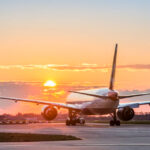
Photo (Airbus/Qantas): Airbus A350-1000 at Sydney Airport

Tony Harrington
Correspondent

More News & Features
Synthetic aviation fuel projects advance in Europe, Africa, US and China
Over €400m in free EU ETS allowances given to airlines in 2025 to support SAF uptake
EASA reports 2025 supplies of SAF exceeded first year of EU mandate
United and FedEx sign agreements to extend SAF supplies and scale up use
Cathay Pacific trials Google’s AI-powered contrail avoidance technology across its network
Nova Pangaea takes major step towards commercial-scale SAF production