








A pilot facility, claimed to be the first of its kind in the world, has opened in the UK that converts non-recyclable waste plastics to sustainable aviation fuel. The new Sustainability Innovation Centre based at Discovery Park in Sandwich, Kent, is operated by Clean Planet Technologies, a division of Clean Planet Group. The company says the UK creates 5 million tonnes of waste plastics each year, 80% of which cannot be recycled, such as carrier bags and food packaging film. The facility has been designed to support fuel and feedstock testing, validation and progression through the ASTM qualification process, with financial support already in place through the government-funded UK SAF Clearing House. The plastics-to-SAF pathway programme is being built on CPTech’s patented pyrolysis oil upgrading technology.
“Our process first heats the waste plastic with a chemical rection to turn it into a liquid, rather than burning it. This is then treated with our patented process to remove impurities and create SAF that meets stringent commercial aviation specifications,” explained Dr Andrew Odjo, CEO at Clean Planet Technologies (CPTech).
“Every day, around 100,000 commercial flights operate globally while approximately 30,000 tonnes of plastic enters the ocean. That’s the equivalent of us dumping 2,000 garbage trucks full of plastic into the world’s oceans, rivers and lakes every single day.
“Our pilot facility will demonstrate this waste can be turned into a premium product with a quantifiable commercial demand, as well as reducing the lifecycle carbon footprint of the aviation industry. We monitor how much energy the process uses and, overall, it cuts the lifecycle GHG emissions by more than 70% compared to traditional fossil jet fuel.”
The company says the fundamentals of the process are all technologies that are currently used independently at commercial scale, so minimising the challenge. The key steps of the process involve:
1. Shredding – Waste plastics are pre-processed and shredded to a uniform size.
2. Pyrolysis – The material is fed into one of the facility’s two pyrolysis units, with the largest capable of processing up to one ton of plastic per day. In this oxygen-free environment, the plastics are thermocatalytically converted into a synthetic crude oil. This melts the plastic, rather than burning it.
3. Purification – Impurities and contaminants in the synthetic crude oil are removed.
4. Distillation – The pyrolysis oil is transferred to a distillation unit, where it is separated into relevant fractions and optimised for upgrading into higher-value fuels.
5. Upgrading – The fractions are then processed through CPTech’s patented hydroprocessing system, which uses hydrogen to further remove impurities and transform the properties of the product to meet stringent SAF specifications.
6. SAF product – The resulting ultra-clean, ultra-low sulphur fuel suitable for aviation use is sent for testing, blending and evaluation as part of the ASTM qualification pathway as SAF.
CPTech was awarded funding earlier this year by the UK Department for Transport through the UK SAF Clearing House, which was set up to accelerate the testing, certification and commercialisation of next-generation SAF. It provides technical guidance, access to recognised testing facilities and support for the ASTM qualification process.
“The testing we facilitate provides the robust evidence base that producers and industry need to build confidence, unlock investment and accelerate the deployment of new fuels,” commented Matthew Jee, Director of the UK SAF Clearing House.
For CPTech, the funding will support detailed fuel characterisation, materials compatibility testing and data generation required for progression through the ASTM process for plastics-derived aviation fuel. The company says it is an active contributor to the ASTM task force for plastics-to-SAF and reports it is working alongside industry partners to establish the regulatory route for this new class of fuels.
“The important thing is that our pilot facility will support the growth of others, helping the UK to meet its SAF mandate,” said Dr Katerina Garyfalou, COO at CPTech.
The company is targeting later this decade for the commissioning of its first commercial-scale unit. Clean Planet Group announced earlier this year that it had received a strategic investment from FTAI Infrastructure, managed by Fortress Investment Group, to support its waste plastics recycling expansion and SAF infrastructure deployment.
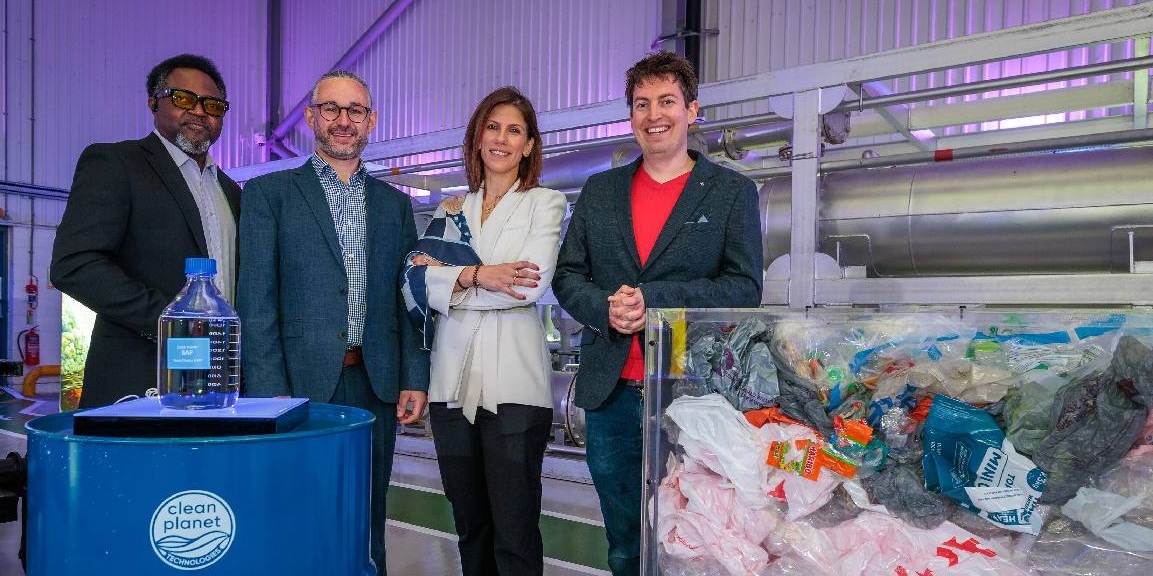
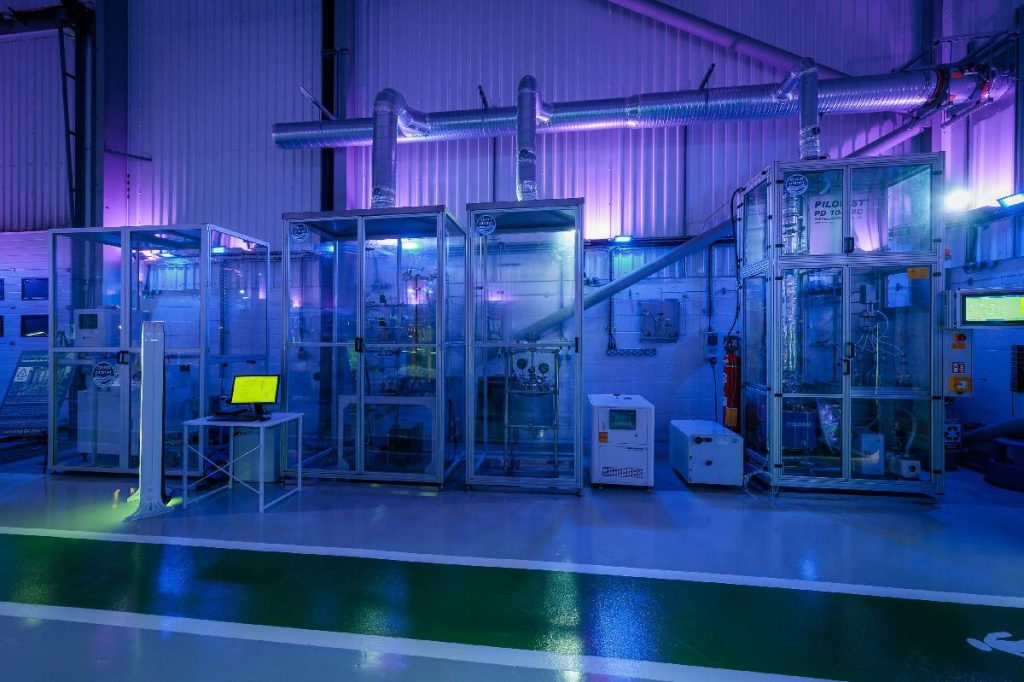
Top photo (Andy Jones/Maxim PR): Inside the Clean Planet Technologies pilot facility
Bottom photo: (L-R) Dr Andrew Odjo, CEO/CTO, Clean Planet Technologies; Matthew Jee, Director, UK SAF Clearing House; Dr Katerina Garyfalou, COO, Clean Planet Technologies; and Bertie Stephens, CEO, Clean Planet Group

Christopher Surgenor
Editor



More News & Features
Boeing signs MoU with state-owned Pertamina to explore SAF development in Indonesia
UK government releases pricing mechanism strategy and timelines to support SAF production
High altitude testing of a 100% SAF-powered Gulfstream business jet shows significant non-CO2 benefits
Deutsche Bank to reduce business travel emissions through SAF deal with Lufthansa Group
SkyNRG’s latest market outlook finds a SAF industry moving from ambition to implementation
Twelve opens AirPlant One, America’s first commercial-scale eSAF facility