

There is a version of the SAF story that sounds like good news. SAF feedstocks – used cooking oil, tallow, animal fats – are sourced domestically, collected regionally, and priced by local supply and demand. They do not move with OPEC decisions or Persian Gulf shipping lanes. When the Strait of Hormuz closed in late February and crude oil surged from $61 to above $114 per barrel, SAF feedstock prices barely flinched. On the production side, SAF is genuinely decoupled from fossil fuel production, upstream logistics and economics. That is a real structural advantage, and the energy security case for SAF rests on it. Here is the part nobody is saying out loud: the price of SAF moved anyway, writes Elvis Ebikade.
SAF prices spiked alongside jet fuel, because SAF is not priced on its own production economics. It is priced as a spread to gasoil futures. Gasoil followed crude up. So SAF followed crude up, even though nothing in SAF’s actual supply chain or feedstock costs had changed.
Repsol, one of Europe’s largest refiners, said it plainly: SAF and renewable diesel prices have risen sharply since the outbreak of conflict in the Middle East because both are priced against gasoil futures, which have proved highly sensitive to disruptions of tanker freight through the Strait of Hormuz.
The production side is decoupled. The pricing side is not. SAF is a volume hedge – you can still source and produce fuel when fossil supply chains break – but not a price hedge, as you still pay as if your fuel came from the same barrel. That contradiction is the framework mismatch and the industry is acting as though it does not exist.
Crude oil figured this out decades ago. Brent reflects North Sea production: light, sweet crude, waterborne, priced for the Atlantic Basin. WTI (West Texas Intermediate) reflects US shale: slightly lighter, slightly sweeter, pipeline-delivered to Cushing, Oklahoma. Dubai/Oman covers heavier, sourer grades bound for Asian refineries. Three benchmarks for one commodity, because one number could not describe a product that varies by geography, chemistry and logistics.
Nobody in oil trading thinks this is exotic. It is basic infrastructure.
Jet fuel inherited that structure. A refiner pricing Jet A-1 knows which crude slate it came from, which cracking unit processed it, and how geography and sulphur content flow through to product cost. The supply chain has pricing resolution. SAF has none of this. We talk about “SAF” as though it is a single product with a single cost structure. It is not.
Same price, different realities
Consider two HEFA SAF cargoes, both offered at the same $/MT headline number.
The first is UCO-based, sourced out of Southeast Asia. The feedstock was aggregated from thousands of small collectors, shipped across fragmented supply chains and processed at a hydrotreatment facility calibrated for high free fatty acid content. The carbon intensity is low, but audit overhead is significant and EU regulatory scrutiny on imported UCO under RED III is intensifying. Indicative UCO feedstock prices in 2025 and 2026 have been in the range of $750 to $1,250/t in Europe and North America, with spikes above $1,400/t in constrained import markets.
The second is tallow-based, sourced from US Midwest rendering plants. The supply chain is shorter, more concentrated and tied to domestic livestock processing. Different carbon intensity profile, different cost structure, different competitive dynamics with renewable diesel for the same barrel of hydrotreated product.
Same headline price. Two radically different underlying supply chains, risk profiles and economics. The headline is hiding the actual decision.
And this is just within HEFA. Alcohol-to-jet pathways have entirely different feedstock economics. Fischer-Tropsch gasification operates on a different cost curve altogether. We are comparing outputs from fundamentally different industrial processes and calling it one market.
The Strait of Hormuz crisis is the clearest demonstration of this mismatch we have ever had. Since late February 2026, the closure has produced what the International Energy Agency has called the largest supply disruption in the history of the global oil market. Brent surged from roughly $61/barrel in January to above $114/barrel. Jet fuel in North America spiked approximately 95% from pre-conflict levels. Airlines raised bag fees, cut routes and at least one carrier ceased operations entirely citing fuel costs.
On the production side, the decoupling held. UCO collection volumes are driven by restaurant and food processing activity, not Persian Gulf shipping lanes. Tallow supply tracks livestock slaughter rates, which have been stable with US feedlot capacity at record levels. Renewable feedstock costs barely moved while crude doubled.
On the pricing side, none of that mattered. SAF prices followed jet fuel up, because they are benchmarked as a spread to gasoil. The chain is straightforward: tanker risk in the Strait of Hormuz pushes gasoil futures higher, SAF prices rise because SAF is priced against gasoil, airlines on fixed-spread SAF contracts pay more and SAF producers’ margins on the spread do not change much. The geopolitical event propagated through SAF pricing without touching SAF supply economics at any point along the chain.
A domestically sourced, regionally produced fuel that holds steady when the conventional barrel does not. The production economics did hold steady. But the price airlines actually paid did not, because the pricing framework dragged SAF back into the same volatility it was supposed to escape.
General Index recently calculated HEFA SAF production costs in Rotterdam at $1,550/t while fossil jet in the same location was assessed at $1,633/t. For possibly the first time, it was cheaper to make SAF than to buy fossil jet. But because SAF is priced as a spread to gasoil rather than on its own production economics, that signal barely registered in the market. The production side sent a clear signal. The pricing side could not hear it.
What this means
The production side and the pricing side of SAF are telling two different stories. Production says: this fuel is competitive, domestically sourced and independent of fossil economics. Pricing says: this fuel costs whatever gasoil futures say it costs. As long as pricing wins, the energy diversification and price hedge that SAF could genuinely offer cannot reach the people making procurement and investment decisions.
For airlines, it means fixed-spread SAF contracts amplify cost exposure to geopolitical events that have nothing to do with renewable fuel supply. For SAF producers, it means the market cannot see when their production economics become competitive, because the pricing lens is pointed at the wrong variable. For project finance, it means new SAF capacity is being underwritten against benchmarks that do not reflect the actual cost structure of the asset being built. And for the energy transition/expansion itself, it means SAF’s most compelling strategic argument – energy supply diversification independent of fossil logistics – is invisible inside the current pricing architecture.
Ryan Ouwerkerk at S&P Global walked me through a useful analogy recently. Liquefied natural gas (LNG) used to be Brent-indexed for the same reason: there was no liquid LNG-specific benchmark, so the market borrowed the closest thing. Once US export capacity scaled, regional and quality benchmarks emerged. The pricing system caught up with the supply structure. SAF needs the same evolution.
I do not know exactly what the right structure looks like. Pathway-specific benchmarks, regional differentials, feedstock-linked spreads, or something we have not designed yet. But I know the current framework is likely not it, and the Strait of Hormuz crisis has just showed us exactly why.
None of this is settled and tomorrow’s prints could rewrite parts of the story. But the first step in fixing the mismatch is admitting that SAF’s production economics and SAF’s market price are living in two different worlds, and that the industry has been acting as if they are not.
To developers, offtakers, investors, traders and airlines reading this: what pricing structure would actually reflect your economics? Are there models from LNG, refined products or power markets we should be adapting? And which price reporting agencies should be leading this?

About the author
Elvis Ebikade
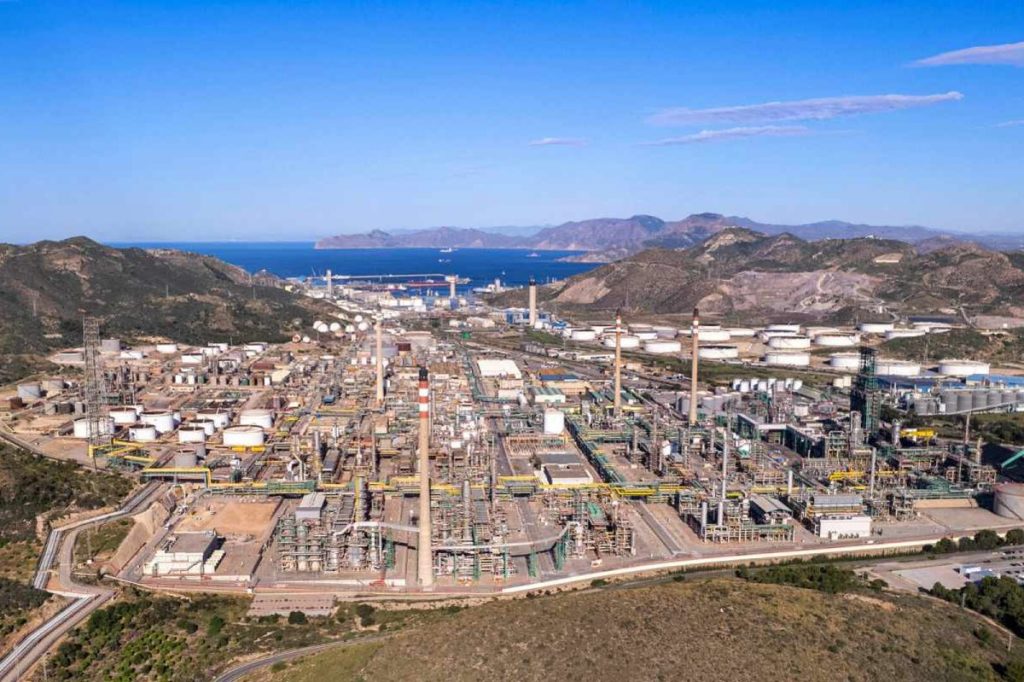
Top photo: Repsol has started large-scale production of renewable fuels at its complex in Cartagena, Spain
Views expressed in Commentary op-ed articles do not necessarily represent those of GreenAir.


More News & Features
Synthetic aviation fuel projects advance in Europe, Africa, US and China
Over €400m in free EU ETS allowances given to airlines in 2025 to support SAF uptake
EASA reports 2025 supplies of SAF exceeded first year of EU mandate
United and FedEx sign agreements to extend SAF supplies and scale up use
Nova Pangaea takes major step towards commercial-scale SAF production
COMMENTARY: Why action lags ambition among States seeking SAF mandates