

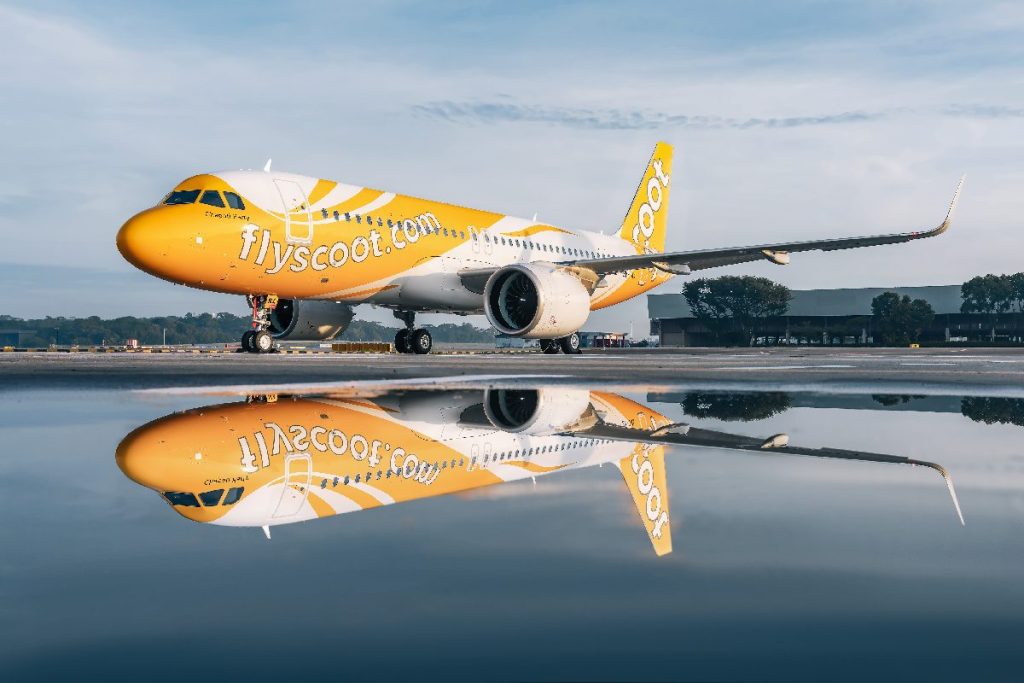
Singapore-based Scoot has been named as the world’s most emissions-efficient airline in Cirium’s annual EmeraldSky analysis of the world’s 100 largest airlines. The ranking is based on CO2 per available seat kilometre (ASK) so, understandably, low-cost airlines fared best but long-haul operators like Qatar Airways, Turkish Airlines, Virgin Atlantic and Air Canada performed well. Improvements over the previous year were largely due to ongoing fleet replacements with modern, more fuel-efficient aircraft. The methodology applied to the rankings is independently assured by PwC to the international ISAE 3000 assurance standard and groups airlines into Gold, Silver and Bronze tiers based on global performance, covering the top 15 airlines as well as key regional and route performers.
“Airline emissions performance comes down to decisions airlines can control – fleet choices, seat configuration and how aircraft are deployed on routes,” commented Cirium CEO Jeremy Bowen on the aviation analytics company’s 2025 EmeraldSky Review. “The airlines at the top of these rankings have got those fundamentals right – and it shows. Better emissions efficiency and lower fuel bills go hand in hand.”
Using flight-level operational data, the edition also tracks year-on-year progress, measuring whether airlines are increasing capacity faster than emissions. EmeraldSky is accredited by the Rocky Mountain Institute as a qualified flight emissions data provider under the Pegasus Guidelines, the first climate-aligned finance framework for aviation.
The data in the report covers the 2025 calendar year and so reflects the period before the disruption caused by the current Middle East conflict that has led to widespread re-routings, flight cancellations and reduced operations at some major hubs.
Airlines operating younger fleets with higher seat density continue to outperform their peers, found Cirium. Scoot is the first Southeast Asian carrier to lead Cirium’s global airline emissions efficiency rankings, with an average seat density of 242 seats per aircraft and an average fleet age of 6.7 years. Singapore Airlines subsidiary Scoot has a mix of Embraer E190-E2 regional jets, Airbus A320 family narrowbody aircraft and Boeing 787 family widebody aircraft.
Its CO2 per ASK was 51.0 grams, ahead of second place Wizz Air’s 52.9. The two low-cost carriers were followed by TUI Airways, Air Europa and Frontier Airlines as the top five airlines globally earning Gold status. Of the top five, Hungary’s Wizz Air had the youngest average fleet age of 4.7 years.
Long-haul operators are closing the gap primarily through fleet renewal by removing from service older, less fuel-efficient aircraft. “Airlines such as Virgin Atlantic demonstrate that newer widebody aircraft and higher-capacity configurations can deliver competitive emissions performance even on long-distance routes,” said Cirium.
The report also carries regional rankings that show first places in Intra-North America, Europe, Southeast Asia, Latin America, Transatlantic and Transpacific went to Frontier Airlines, Wizz Air, VietJet, JetSmart, Virgin Atlantic and Air Canada respectively.
Korean Air recorded the largest long-haul route improvements globally, driven by a transition to next-generation aircraft on key transpacific routes.
“The route-level data tells a clear story,” said Bowen. “When airlines swap older widebodies for next-generation aircraft, emissions per seat kilometre can fall by as much as 27% on that route within a year. This isn’t theoretical – we’re measuring it on real routes with real operational data.”
Photo: Scoot has just announced a firm order for five Airbus A320neo family aircraft, which will be progressively delivered from 2028

Christopher Surgenor
Editor



More News & Features
Global aviation’s gross emissions to rise 87% by 2050 despite efficiency gains, forecasts IBA
SkyNRG’s latest market outlook finds a SAF industry moving from ambition to implementation
ANALYSIS: What an expanded EU ETS coverage could mean for airlines
Significant support needed over next five years to achieve net zero, says industry report
Cirium analysis challenges assumptions between aviation growth and environmental impact
Aviation likely to be the UK’s leading emitter by 2040, forecasts Climate Change Committee