

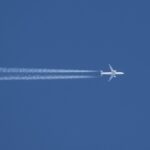

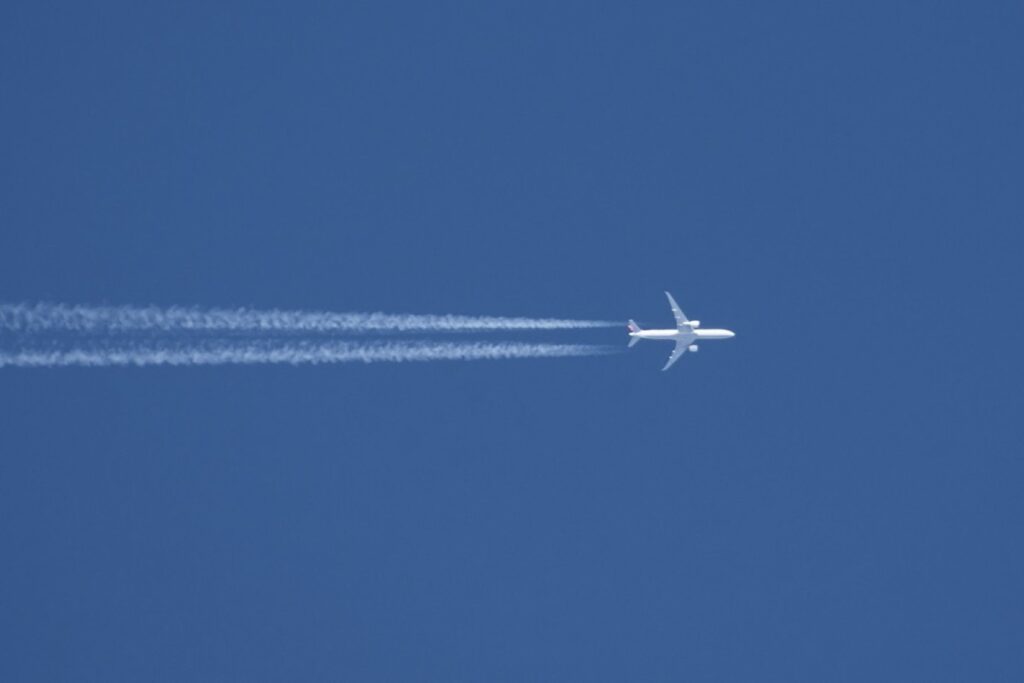
Air France has shared the results of a large-scale test programme to better understand and mitigate the impact of contrails. Carried out in collaboration with French startups Estuaire and Klima, the trial covered nearly 4,300 commercial flights operated over the North Atlantic, a region particularly prone to contrail formation. The targeted trial took place between February and April 2026, with the aim to identify and avoid areas with a high probability of persistent contrail formation. Drawing on weather conditions, Air France teams identified 245 flights with a high potential climate impact, for which alternative flight paths were calculated and assessed, and of these, 130 flights were ultimately rerouted. A key finding within the scope of the trial was that 3% of flights accounted for 25% of the total climate impact associated with contrails.
Air France said the test programme, one of the biggest by an airline to date, had two objectives: to deepen its understanding of the conditions in which the contrails with the greatest warming effect form and to assess, under real-world operating conditions, the feasibility of flight path adjustments designed to reduce their climate impact.
The results of the trial, it reported, showed that targeted avoidance strategies can prevent contrail formation or, when prevention is not possible, significantly reduce their climate impact. The rerouted flights avoided a climate impact equivalent to 22,000 tonnes of CO2 and reduced the climate impact associated with contrails by 8% across the trial scope. Of the flights that were effectively rerouted, the airline reports that even better results were obtained, with a 57% reduction in contrail climate impact and a 36% reduction in overall climate impact.
“The results are encouraging and will be shared as part of ongoing scientific and European research initiatives,” commented Vincent Etchebehere, VP Sustainability and New Mobilities at Air France. “By making its expertise and flight data available, we aim to contribute transparently and rigorously to identify effective solutions that can be implemented at scale while remaining compatible with the operational requirements of air transport.”
The airline added that initiatives to reduce non-CO2 climate effects would require close cooperation with air traffic control stakeholders, “as any change to a flight path remains subject to their approval.”
The test programme was conducted as part of the EU-funded CICONIA non-CO2 project, which does bring together air traffic stakeholders, as well as research institutions, aircraft manufacturers Boeing and Airbus, and other airlines including SWISS and easyJet.
Estuaire and Klima, which develop solutions to reduce the climate impact of aviation, acted as technology and operational partners on the programme.
“It is a collective pride to contribute to this research on contrails. Reducing these phenomena requires a better understanding of the mechanisms leading to their appearance, and this test phase confirms that concrete solutions can be put in place. We stand ready to continue this work, in conjunction with the various stakeholders concerned,” said Laurent Lafontan, EVP Flight Operations at Air France.
Photo: Air France

Christopher Surgenor
Editor



More News & Features
News Roundup September 2026
Over €400m in free EU ETS allowances given to airlines in 2025 to support SAF uptake
EASA reports 2025 supplies of SAF exceeded first year of EU mandate
United and FedEx sign agreements to extend SAF supplies and scale up use
Transport NGOs call EU ETS aviation extension proposals a missed opportunity
Heathrow expansion incompatible with climate targets, advises UK government watchdog