






Despite a 20% gain in fuel efficiency of the global commercial passenger fleet, aviation’s absolute emissions are forecast to rise 87% by 2050, forecasts aviation market intelligence company IBA. It estimates direct tailpipe emissions from passenger aircraft will rise from 843 million tonnes of CO2 in 2025 to 1,583 MtCO2 in 2050. This, points out IBA, is gross tank-to-wake emissions, so not inclusive of emissions reduction benefits from the use of sustainable aviation fuels or the application market-based measures. The rise in absolute emissions will be driven by a 134% growth in global passenger traffic, measured in revenue passenger kilometres (RPK), and expansion of the commercial aircraft fleet to more then 56,000 aircraft over the period. IBA’s NetZero platform notes a growing divergence between absolute emissions and emissions intensity.
Under its 20% fuel efficiency gain forecast, average fleetwide emissions intensity would fall from around 91gCO2/RPK in 2025 to 73gCO2/RPK by 2050, driven by fleet renewal and future aircraft delivering lower fuel burn than the aircraft they replace. However, this gain will not be sufficient to offset the effect of continued traffic growth, and the industry will be dependent on an acceleration of credible sustainable fuels and carbon removals, says IBA in its latest Sustainability Watch analysis.
“We expect fleet renewal to continue delivering meaningful improvements in emissions intensity through to 2050, but the scale of projected passenger growth means this will not be enough to reduce absolute emissions on its own,” commented Archie Brown, Senior Analyst at IBA.
“Closing the gap between this baseline outlook and the industry’s net-zero ambitions will require much greater deployment of sustainable aviation fuel, alongside further operational efficiencies and effective policy intervention. The challenge will be ensuring those measures scale quickly enough to keep pace with the continued growth of global air travel.”
Dedicated freighters are excluded from IBA’s analysis and assumes zero-emission aircraft will enter the fleet only from 2046 and account for just 0.3% of the global commercial passenger fleet by 2050, with their impact confined to local and regional travel.
IBA’s baseline scenario combines aircraft series-level delivery and retirement forecasts with projected demand, utilisation and load factors, with emissions calculated by aircraft series using efficiency assumptions for future models.
Rather than representing a net-zero pathway, the analysis provides a benchmark against which airline and industry decarbonisation strategies can be assessed, recommends IBA.
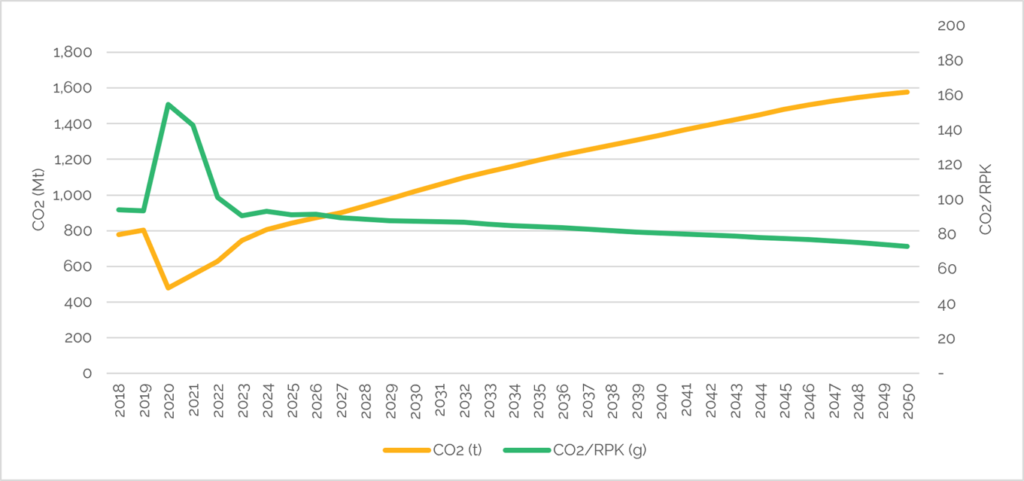
Absolute emissions vs emissions intensity (Source: IBA NetZero)
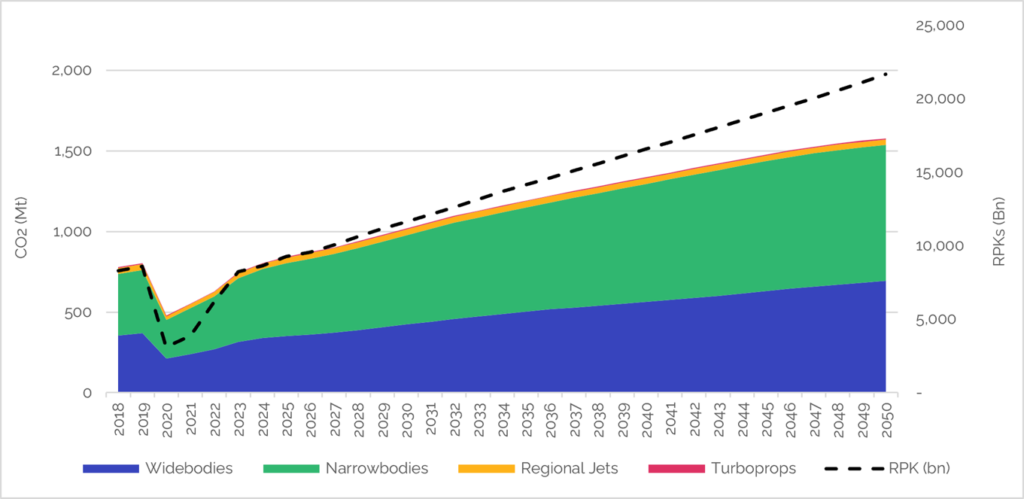
Absolute emissions by aircraft class vs global traffic (Source: IBA NetZero)
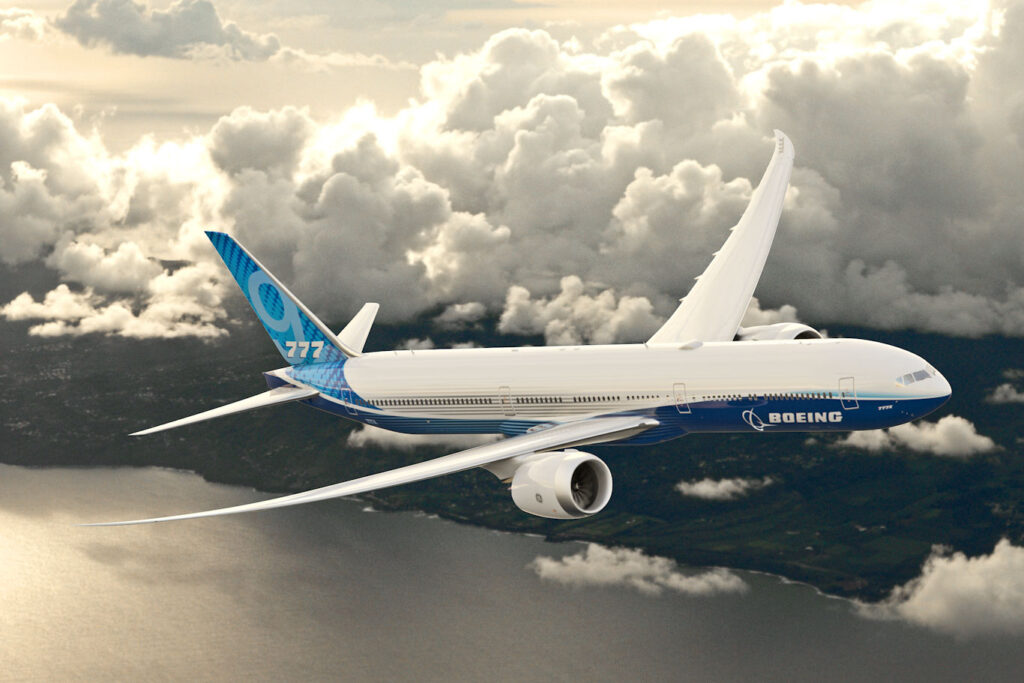
Top photo: The Boeing 777X family, specifically the 777-9 variant, is due to enter service in 2027, promising a 20% improvement in fuel efficiency

Christopher Surgenor
Editor



More News & Features
News Roundup September 2026
Air France shares results of large-scale North Atlantic contrail avoidance trial
Over €400m in free EU ETS allowances given to airlines in 2025 to support SAF uptake
EASA reports 2025 supplies of SAF exceeded first year of EU mandate
United and FedEx sign agreements to extend SAF supplies and scale up use
Transport NGOs call EU ETS aviation extension proposals a missed opportunity