


Two Swiss cleantech startups, Metafuels and Synhelion, have announced key milestones in plans to develop their advanced technology pathways to commercialise new-generation sustainable aviation fuel production in Europe. Zurich-based Metafuels has awarded a contract to McDermott for front-end engineering and design (FEED) of its Turbe project, a first-of-a-kind eSAF facility to be built at the Evos terminal in the Port of Rotterdam. The plant is expected to be the first commercial deployment of Metafuels’ proprietary methanol-to-jet technology, aerobrew. Also based in Zurich, Synhelion has signed a long-term offtake agreement with Swiss International Air Lines (SWISS) in which the airline will purchase at least 200 tonnes of solar jet fuel annually from 2027. In July, Synhelion delivered its first barrel of syncrude from its DAWN production facility to a refinery in Northern Germany, where it was processed into Jet-A1 aviation fuel and fed into SWISS’s flight operations infrastructure via the fuel supply system at Hamburg Airport.
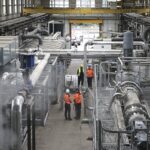
Metafuels has installed a 50 litres per day methanol-to-jet (MtJ) demonstration plant at the Paul Scherrer Institut (PSI) in Switzerland, where the aerobrew technology was developed.
Under the contract award from Metafuels, McDermott will perform basic engineering and design services to define and optimise the technical specification of the plant, as well as cost estimating services. The FEED represents the final engineering stage prior to a final investment decision (FID).
“Selecting McDermott for this crucial engineering phase marks a defining moment in our journey towards scalable eSAF production,” said Saurabh Kapoor, CEO of Metafuels. “With implementation of our demonstration plant at PSI, and Turbe advancing towards FID, we are steadily industrialising our aerobrew advanced SAF technology. Europe has set ambitious decarbonisation targets, and with project partners like McDermott and Evos, we are building the capacity needed to make those targets achievable.”
Metafuels’ technology focuses on producing synthetic aviation fuels made via the e-methanol route using renewable electricity as the primary energy source. The company says its conversion process produces a significantly higher yield and claims up to 90% lower lifecycle carbon emissions compared to conventional kerosene.
The Turbe plant in Rotterdam is being designed to produce 12,000 tonnes of eSAF per day initially, with plans for a second phase to increase production tenfold to 120,000 litres per day. In 2024, Metafuels announced a planned production facility in Denmark, named Pizol.
The aerobrew plants are designed to process bio-methanol or e-methanol interchangeably, allowing the production of bio-SAF or eSAF, or both simultaneously, in response to market signals, reports the company.
It says it has raised $22 million in investment support in just over two years, including a $5 million grant from the Swiss Federal Office of Energy, making it “one of Europe’s best-funded SAF startups.”
Founded in 2016, the origins of Synhelion’s solar fuel came from the lab of another Swiss research university, ETH Zurich. Lufthansa Group and its subsidiary SWISS have been partners of Synhelion since 2020 and shareholders since 2022.
The company has developed a technology to harness the renewable energy from the sun and uses RED-certified sustainable biogenic waste, mostly agricultural waste, as a carbon source, which is then converted into raw biogas for use as the feedstock for liquid fuel production.
“Our highly efficient and scalable technology is ready to meet the rapidly growing global demand for renewable fuels,” said Synhelion’s co-CEO and co-Founder, Gianluca Ambrosetti. “With our technology proven at industrial scale and protected by 21 patent families, Synhelion is positioned to lead in the rapidly growing, regulation-driven renewable fuel market – where demand is set to outpace supply.”
Part of the renewable jet fuel produced by Synhelion under the offtake agreement with SWISS will be resold to logistics service provider Kuehne+Nagel. The company will use it for airfreight transportation with Swiss WorldCargo, offering customers a solution to reducing their global logistics’ carbon footprint.
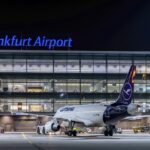
“The partnership with Synhelion is a significant step for SWISS on the path to decarbonising our flight operations,” said Jens Fehlinger, CEO of SWISS. “SAF is a core element of our sustainability strategy. The offtake agreement sends a strong signal for innovation and responsibility in aviation.”
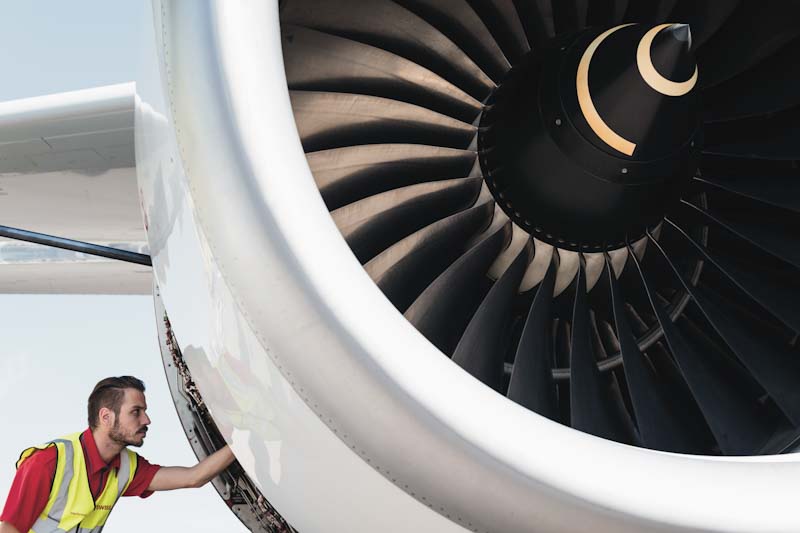
Photo: Swiss International Air Lines

Christopher Surgenor
Editor


More News & Features
Air France shares results of large-scale North Atlantic contrail avoidance trial
Over €400m in free EU ETS allowances given to airlines in 2025 to support SAF uptake
EASA reports 2025 supplies of SAF exceeded first year of EU mandate
United and FedEx sign agreements to extend SAF supplies and scale up use
Nova Pangaea takes major step towards commercial-scale SAF production
COMMENTARY: Why action lags ambition among States seeking SAF mandates