
The Singapore initiative is a significant new step in the growing pan-APAC drive to reduce carbon emissions from air transport. Procurement will increase to support an escalating target of 3-5% by 2030, subject to global developments, says CAAS, and the wider availability and adoption of SAF.
In addition to purchasing fuel to meet regulated demand, SAFCo will also aggregate voluntary SAF demand from organisations wanting to compensate for the emissions created by staff air travel.
Han Kok Juan, Director General of CAAS and Chairman of SAFCo, said the new agency would provide a “concrete step forward” in the drive to decarbonise air transport in Singapore and beyond.
“Singapore is taking a pragmatic, balanced and action-oriented approach to advancing sustainability in the aviation sector,” he said. “Through SAFCo, we want to get the best value for the SAF Levy collected and activate a SAF ecosystem which will help advance sustainable aviation and create new economic opportunities for Singapore and beyond.”
SAFCo’s inaugural CEO is Tan Seow Hui, a former senior executive of Shell, who was instrumental in developing and launching Avelia, a global platform created by the oil company as the world’s first blockchain-enabled SAF environmental attribute programme to enable purchasers to verify the fuel’s compliance with sustainable production and delivery requirements.
“My priority will be to put in place credible and scalable frameworks, partnerships and processes to ensure that SAFCo delivers on its mandate to aggregate demand, procure SAF efficiently and manage SAF environmental attributes transparently,” she said. “By working closely with airlines, businesses and suppliers, we aim to facilitate greater SAF adoption in the region and contribute to the decarbonisation of aviation.”
While details of the SAF Levy amounts and collection processes are expected to be revealed early next year during the Singapore International Air Show, CAAS is confident the programme will deliver sufficient supplies for the growing number of flights from Singapore.
“With predictable and stable cashflows,” said the agency, “SAFCo can sign longer and larger contracts with SAF suppliers, providing demand certainty in a still-nascent SAF market. This approach aims to encourage investment in SAF production capacity and the development of SAF-related carbon markets in Singapore and the region.
“Through SAFCo, CAAS seeks to build a transparent and integrated SAF demand market that brings together airlines, corporate buyers of SAF, fuel producers, carbon market platforms and stakeholders across the aviation fuel chain in Singapore to aggregate demand, stimulate investment and accelerate the use of SAF.”
In Hong Kong, on the sidelines of the IATA World Sustainability Symposium, local carrier Cathay Pacific and Airbus announced an investment fund of up to $70 million, and pledged to “identify, evaluate and invest in projects that support the scaling of SAF production towards 2030 and beyond.”
The companies will assess initiatives based on their commercial viability, technological advancement and potential for long-term deployment.
“SAF remains the most important lever for Cathay and the wider aviation industry to drive towards our common decarbonisation goals,” said Alex McGowan, Cathay’s Chief Operations and Service Delivery Officer.
“This co-investment partnership with Airbus underscores our commitment to supporting a more scalable SAF industry in the near term. It complements our broader strategy of investing in the technologies and production capacity that can transform the industry in the long run, including our participation in the recently-announced oneworld BEV SAF Fund.
“Meanwhile, we are also expanding SAF usage today through partnerships with like-minded organisations.”
Cathay is a long-standing customer of Airbus, with more than 85 aircraft in service and another 70 to be delivered.
“This agreement reflects the shared commitment of Airbus and Cathay to make a real difference,” said Airbus Vice President, Asia Pacific, Anand Stanley. “The production and distribution of affordable SAF at scale requires an unprecedented cross-sectoral approach. Our partnership with Cathay is a concrete example of how we catalyse production in the most suitable locations to serve our customers.”
Still in Hong Kong, renewable fuel producer EcoCeres announced that it had joined the United Nations Global Compact, committing it to aligning with principles including environmental stewardship, human rights, labour standards and anti-corruption measures. In doing so, said the company, it was the first company dedicated solely to producing renewable fuels including SAF to sign up for the compact.
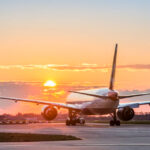
Photo: Singapore Airlines

Tony Harrington
Correspondent


More News & Features
Synthetic aviation fuel projects advance in Europe, Africa, US and China
Over €400m in free EU ETS allowances given to airlines in 2025 to support SAF uptake
EASA reports 2025 supplies of SAF exceeded first year of EU mandate
United and FedEx sign agreements to extend SAF supplies and scale up use
Cathay Pacific trials Google’s AI-powered contrail avoidance technology across its network
Nova Pangaea takes major step towards commercial-scale SAF production