

GreenAir’s roundup of the latest news and comment from around the world on efforts to reduce aviation’s climate and environmental impact

REGIONAL SAF NEWS
EUROPE:
UK SAF startup Nova Pangaea Technologies has appointed cleantech veteran Stewart Stewart as its new CEO. Originally from Texas, he joins from New York-based investment bank Javelin Capital, where he advised on green fuel opportunities. He has previously held executive leadership roles with cleantech companies BayoTech and Concord Blue Energy in Los Angeles, and was a senior adviser to London-based Ikigai Energy. Replacing Sarah Ellerby, who recently stood down, he will lead the growth of Nova Pangaea, including development of its first commercial plant in north-east England.
The company’s REFNOVA technology converts cellulosic biomass like forestry and agricultural residues into bioethanol, which can then be processed into SAF. It operates a demonstration plant at a major manufacturing site in Tees Valley. It is currently working with British Airways and LanzaJet on Project Speedbird, and plans to deploy its technology at four production plants across the UK, as well as to license its technology internationally.
Oxford, UK-based SAF startup OXCCU has won the 2026 Startups 100 Sustainability Award, which honours businesses that demonstrate innovative and impactful sustainability practices. It has developed a single-step process that combines captured CO2 with green hydrogen to create jet fuel range hydrocarbons. Its patented iron catalyst converts CO2 and CO directly into liquid hydrocarbons in a single reaction, avoiding intermediate steps and minimising byproducts. The company’s OX1 demonstration facility at London Oxford Airport has now logged 1,000 hours producing liquid fuel, reportedly with high conversion rates. OXCCU recently secured £20.75 million in Series B funding to further scale its fuels and technologies.
Moeve has completed the supply of SAF to Condor for flights from Tenerife South Airport to major German destinations including Hamburg, Munich, Frankfurt and Germany. The agreement covered more than 515 tonnes of SAF, produced from used cooking oils and agricultural waste at Moeve’s La Rábida Energy Park in Huelva, where it is currently building a new second-generation biofuels plant with a flexible annual production capacity of 500,000 tonnes of SAF and renewable diesel. It is more than 50% complete, says the company, and slated to begin production at the end of 2026, when it will become the largest of its kind in southern Europe.
“Since last year, Condor guests have had the opportunity to voluntarily round up their flight booking price or make direct contributions to advance SAF and certified climate protection projects,” said Sina Rathberger, Director Airport Relations, Government Affairs and Sustainability at Condor. “These funds are exclusively allocated to procure and deploy additional SAF beyond regulatory mandates.”
French advanced biofuels technology company Haffner Energy and Madrid-headquartered power-to-energy player IGNIS P2X have announced the start of their bio/eSAF collaborative AeroVerde project, which will initially involve identifying the location for the site in Spain. Haffner’s technology converts residual biomass with no conflicts of use into a hydrogen-rich syngas that can be used to produce bioSAF through various pathways such as alcohol-to-jet and Fischer-Tropsch. In addition, excess biogenic CO2 from the syngas production process can be combined with renewable hydrogen of non-biological origin (RFNBO) produced by IGNIS P2X to then produce eSAF. IGNIS launched its P2X platform in 2024 to develop green hydrogen, ammonia and other clean technology projects in Spain and internationally. The group has a total portfolio of over 30 GW of renewable projects in operation and under development in Europe, the US, Latin America and Asia.
Topsoe has been chosen to deliver advanced Solid Oxide Electrolyzer Cell technology for Carbon Neutral Fuels’ (CNF) commercial-scale eSAF project called Project Starling in Workington, UK. Construction is planned for 2028 and operations expected in 2031, pending FID, with the plant slated to produce 25,000 tonnes of eSAF per year. Topsoe has signed a FEED agreement with CNF, which marks the first commercial application of its SOEC technology for use in commercial SAF production.
Topsoe meanwhile has announced changes to its leadership with current CCO Elena Scaltritti taking over as CEO in June 2026 when Roeland Baan steps down. The company’s EMEA region Vice President, Yassir Ghiyati, has been appointed CCO with immediate effect.
The UK Department for Transport has awarded £181,000 ($250,000) in funding through the UK Sustainable Aviation Fuels Clearing House to four startup SAF producers: Avioxx, Clean Planet Technologies, Green Lizard Technologies and Zero Petroleum. The investment is aimed at accelerating the testing, certification and commercialisation of next-generation SAF. The UK SAF Clearing House provides advice and support to SAF producers navigating the fuel testing landscape. It helps SAF innovators access government funding, provides guidance on qualification requirements, connects them to recognised testing facilities and acts as a collaborative forum to accelerate commercialisation.
AMERICAS:
US chemical reactor technology company Syzygy Plasmonics has announced a binding six-year SAF offtake agreement between its subsidiary SP Developments Uruguay and global commodities company Trafigura. It covers the entire production volume of Syzygy’s first plant, NovaSAF-1, to be located in Uruguay, with first deliveries targeted in 2028. The agreement also includes an option for Trafigura to purchase additional volumes from Syzygy’s future projects.
Syzygy’s solution addresses the constraints of tightening availability of sustainable feedstocks, says the company, by combining abundant biogas with renewable electricity in a modular, electrified platform. Trade named NovaSAF, its pathway has received ISCC pre-certification to produce Renewable Fuels of Non-Biological Origin (RFNBO) and Advanced BioSAF compliant fuels.
Gevo has been awarded a US patent that broadens protections for different catalyst combinations and explicitly protects the use of Ethanol-to-Olefins (ETO) technology to produce fuels, including renewable jet fuel. The company is developing ETO with partners LG Chem to deploy the process for renewable chemical applications, and with Axens and IFP Energies nouvelles (IFPEN) for fuel applications. The patented process produces light olefins from ethanol and can convert them into transportation fuels using commercially proven alcohol-to-jet technologies.
Transitioning from his previous role as Chief Business Development Officer, Alex Clayton has been named by Gevo as its new Chief Carbon Officer to advance the company’s voluntary carbon markets activity. Gevo believes its North Dakota facility is the largest producer of engineered carbon dioxide removal credits and is the only ethanol carbon capture and storage project to issue credits with thousand-year permanence. The company has announced the plant has now issued more than 500,000 Puro.earth-certified certificates since CCS activities began in June 2022.
Topsoe has been selected by Uruguay’s state-owned energy company ANCAP to deliver technology and services for a HEFA unit located at the La Teja Refinery in Montevideo. The project will use Topsoe’s HydroFlex technology, proprietary equipment and catalysts to enable the production of SAF and renewable diesel. The project is expected to reach final investment decision (FID) in 2027, with commercial operations due to begin in 2030 and will use rapeseed oil and beef tallow as feedstock to produce approximately 3,000 barrels of SAF and renewable diesel per day.
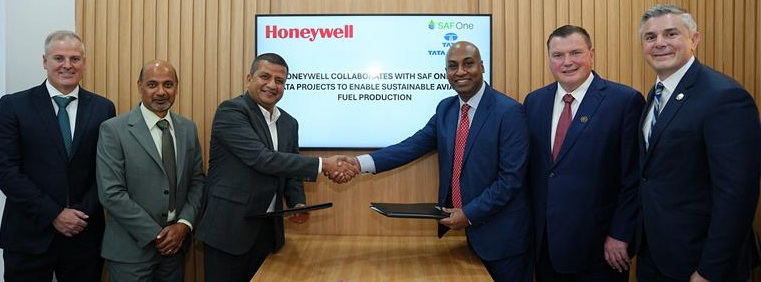
SAF One announces new investment and technology partners for Middle East SAF project
29 January 2026
Investment fund SAFFA is to inject up to $30 million into a Middle East sustainable aviation fuel project under development by Dubai-based SAF One Energy Management that is due to break ground this year and targeting production by the end of 2028. With $10 million of the total already invested, SAFFA will scale its investment over time as the project progresses and SAF is offered to the aviation industry. SAF One has also announced two new partners to the project, the location of which is still to be disclosed, with India’s Tata Projects selected as the engineering, procurement and construction (EPC) lead and Honeywell UOP providing its Ecofining process technology to produce HEFA-based SAF. Together, they will deliver an integrated solution tailored to SAF One’s project requirements. SAF One plans to develop a portfolio of SAF facilities globally, including one in India.

New studies confirm minor flight re-routing to avoid contrails would have major climate benefits
28 January 2026
Two newly-published European studies into aviation’s contrail-related global warming impact conclude that adjusting the routes of a small number of flights would have minimal effects on air navigation but result in major climate benefits. Analysis by Transport & Environment (T&E) shows that 25% of European contrail warming impact comes from night flights in autumn and winter, which make up just 10% of European air traffic. The concentration of contrails occurs not only at specific times of the year but also around specific locations and the study confirms the North Atlantic has high contrail avoidance potential. A study by Chalmers University of Technology in Sweden and Imperial College in the UK analysed nearly half a million flights across the North Atlantic, which the research team says has generated new insights that can support both industry and policymakers in guiding aviation towards more climate optimal operations.
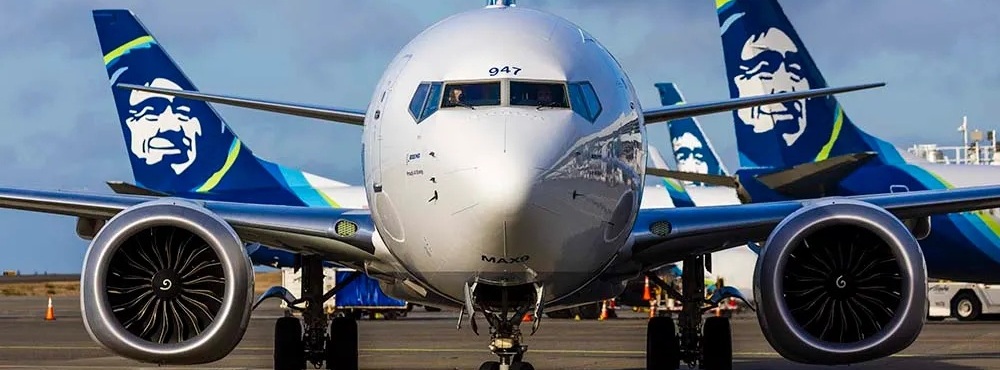
New initiative formed to accelerate SAF adoption and production in the Pacific Northwest
28 January 2026
A coalition of stakeholders centred in Washington State has come together to form a new public/private partnership, the Cascadia Sustainable Aviation Accelerator (CSAA), which aims to rapidly accelerate the production, deployment and adoption of sustainable aviation fuel across the Pacific Northwest of the United States. CSAA’s work, says its members, will simultaneously support aviation’s decarbonisation objectives while building economic resilience for aviation and securing the region “as the next global hub for sustainable aviation”. In partnership with the Washington State Department of Commerce, CSAA will be funded through a 2025 State of Washington appropriation and a private philanthropic donation of an additional $10 million. Partners include Alaska Airlines and its subsidiary Hawaiian Airlines, Boeing, Washington State University, Pacific Northwest National Laboratory, Amazon, Earth Finance and Port of Seattle.

EU SAF mandates will have to be revised, predicts French oil chief
23 January 2026
Speaking in a panel session on clean fuels at the World Economic Forum’s Davos meeting, the CEO of French oil major TotalEnergies, Patrick Pouyanné, said he expected the EU would eventually have to revise sustainable aviation fuel mandate targets in the same way it had retreated on the regulation to ban the sale of petrol and diesel cars in Europe from 2035. He said the main barriers to SAF production in the EU was the affordability of the fuels and uncertainty over policy. The gradual increase in the mandated use of renewable diesel had worked as the higher price had been absorbed over time, he said. In contrast, European SAF mandates required a big jump from a current 1% usage to 6%, or even 10%, by 2030 and then steeper rises thereafter, causing “a panic”, he said. As a big fuel producer, he said investing in new biorefineries was questionable at present and would instead focus on producing SAF through co-processing.

FEATURE: Lessons learned from the collapse of Fulcrum BioEnergy
19 January 2026
Like a once-thriving frontier town, the remnants of the Fulcrum BioEnergy plant in the desert near Reno, Nevada, illustrate the challenges of designing, building and operating a novel plant to produce sustainable aviation fuel from municipal solid waste. Fulcrum laid off most of its staff in May 2024 and filed for Chapter 11 that September. The building site was listed for auction and sold in late 2024, while other assets were sold or settled through the bankruptcy court. Jim Stonecipher learned from his involvement helping to bring that plant from ‘steel in the ground’ to first production how to avoid the pitfalls that bedevil first-of-a-kind (FOAK) projects. As Managing Director of EdyMac, he now provides advice on strategy, management, project development and operational consultation. In an interview with Energy Intelligence, he describes the lessons learned from his three decades of experience in that sphere.

Early data shows uncertainty that UK SAF mandate can be met in its first year
13 January 2026
Data from the UK Department for Transport (DfT) indicates sustainable aviation fuel made up 1.63% of the total jet fuel in the period January to late October 2025, representing 163 million litres of SAF out of a total of 10 billion litres of all aviation fuel supplied. Some believe this is likely to result in the UK missing the 2% target of the first year of its SAF Mandate, although the DfT says the volumes are provisional and not all suppliers have reported. Final figures are not expected to be published until November 2026. UK industry body Sustainable Aviation said it was confident the 2025 mandate requirement would be met. Used cooking oil made up the entire feedstock of the SAF supplied, with the vast majority (72%) coming from China, the rest from Japan and Taiwan. Legislation to incentivise SAF producers through a revenue certainty mechanism (RCM) is passing through Parliament and the DfT has opened a new consultation on how contracts could be allocated to prospective projects.
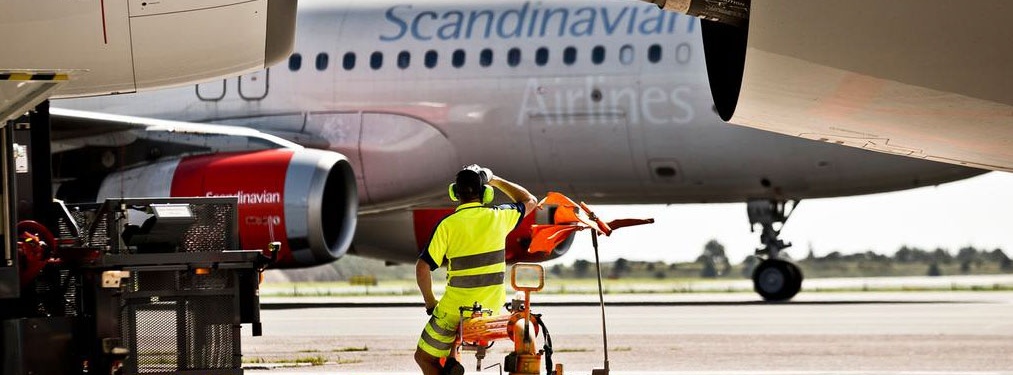
SkyTeam announces airline finalists of its competition to drive action on sustainability
8 January 2026
SkyTeam has announced the finalists across 18 award categories in the fourth edition of The Aviation Challenge, the airline alliance’s global initiative designed to help accelerate sustainable innovation and knowledge sharing in the aviation industry. Twenty-two airlines participated in the competition and last September they completed a month-long series of more than 80 showcase flights, the highest number to date. Collectively, they also submitted 224 solutions and initiatives for awards that were aligned with edition’s ‘Impact’ theme: to demonstrate measurable achievements in reducing carbon emissions, improving energy efficiency and optimising waste management. All entries were assessed against a comprehensive set of technical criteria by a panel of aviation and sustainability experts, including the Netherlands Aerospace Centre (NLR) and PA Consulting.
NEWS EXTRA
With the European Commission due to report on the scope of the EU Emissions Trading System this summer, analysis by non-profit think tank InfluenceMap shows the positions between short-haul and long-haul airlines on the scheme have narrowed. Introduced in 2012, the original intention was to include all flights arriving and departing from the European Economic Area, as well as intra-European flights. International pressure and industry lobbying persuaded the EU to scale back the scope to intra-EEA flights only, but only temporarily. While the long-haul legacy airlines accepted the move, short-haul carriers such as Ryanair and easyJet opposed it on the grounds that this disadvantaged them. Now, according to InfluenceMap, the two carriers are aligning their lobbying efforts with legacy airlines, although it notes a small number of actors, including Wizz Air, have continued to support expanding the ETS to all flights, arguing that this would provide regulatory certainty and unlock substantial climate finance.
Toulouse-based Beyond Aero reports it has successfully completed its first wind tunnel test campaign, which it describes as a major milestone towards the end of the preliminary design phase of its hydrogen-electric business aircraft. The campaign focused on one of the programme’s most critical challenges: ensuring predictable aerodynamic performance, stability and control for an aircraft integrating gaseous hydrogen tanks outside the fuselage. “The development of a hydrogen-electric aircraft requires precise aerodynamic design. The strong correlation between experimental results and numerical simulations, in the linear domain, gives us a solid validation of our numerical process,” said Delphine Bonnaud, Head of Aerodynamics at Beyond Aero. A video of the wind tunnel test can be watched here.
A new report by IDTechEx forecasts the global SAF market may reach $50 billion in 2036, representing a 10-year CAGR of 21%. However, it notes, there is still a large amount of regulatory uncertainty surrounding SAF. For example, in the US, the planned project pipeline for SAF is very large but current available government support for SAF would not economically incentivise SAF over renewable diesel production at most facilities outside of voluntary demand from airlines. In the short term, it says, this may lead to significant SAF overcapacity as facilities open ahead of expected regulatory demand.
The UK government is to allocate £43 million ($60m) to green aviation projects that will go towards progressing zero emission aircraft and research into how climate-warming contrails can be avoided. With the production of low carbon fuels alone expected to add up to £5 billion to the economy by 2050, the funding will drive millions of pounds of private investment into the aviation sector, supporting skilled jobs in technology development and scientific research, and funding projects to cut aviation emissions, promises the government. UK businesses, researchers and universities will be invited to bid for their share of the funding, with competitions launching from February.
The European Commission has confirmed that as of 1 January 2026, Switzerland has adopted the ReFuelEU Aviation Regulation. Aviation fuel suppliers at Zurich and Geneva airports will need to ensure their fuel contains a minimum 2% SAF blend, ramping up to 70% by 2050. Airlines are also mandated to follow the 90% fuel uplift rule, helping cut unnecessary emissions caused by carrying extra fuel weight. The Swiss Federal Office of Civil Aviation has published technical guidance to support operators in the transition.
Low-cost carrier easyJet says its last remaining A320ceo aircraft are due to be retrofitted with Airbus-manufactured sharklets by this summer. Sharklets are blended winglet devices that reduce fuel consumption by increasing the effective wingspan and minimising lift-induced drag by up to 4%. Once completed, easyJet says the upgrade will offer an additional combined fuel saving of 2,156 tonnes across its fleet, an equivalent reduction of almost 7,000 tonnes of CO2 per year. They will also increase mission range by up to 100 nautical miles and also allow the aircraft to accommodate an additional six seats.


More News & Features
News Roundup September 2026
News Roundup July/August 2026
News Roundup June 2026
News Roundup May 2026
News Roundup April 2026
News Roundup March 2026