

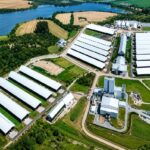

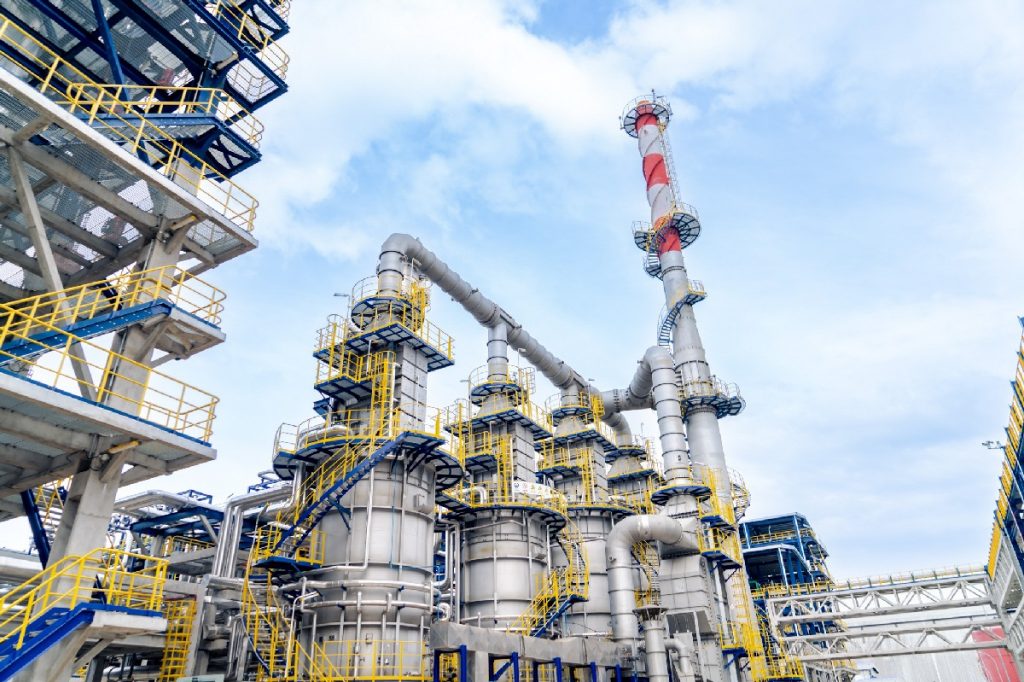
Hong Kong-based renewable fuels producer EcoCeres has officially opened its new sustainable aviation fuel facility in Johor, Malaysia, the country’s first of its kind. Commissioning and start-up of the plant was completed in October and will produce HVO and renewable naphtha as well as SAF from the conversion of waste and residue feedstocks, with a combined capacity of 420,000 tonnes per year. In addition to the Malaysian facility, the company’s Zhangjiagang plant in China also produces SAF and renewable naphtha, bringing total global capacity to around 770,000 tonnes per year. With abundant agricultural waste feedstock availability, SAF production in the region is expected to grow rapidly. Malaysia’s neighbour Thailand has recently introduced a SAF mandate starting at 1% in 2026 and increasing to 8% by 2036. In Hong Kong, Cathay Pacific and Airbus have signed a joint investment agreement of up to $70 million to accelerate the development of SAF production in Asia and globally.
At the inauguration ceremony of its Johor facility, founding investor of EcoCeres, Dr Peter Lee, said: “EcoCeres has grown from a laboratory in Hong Kong into one of the world’s leading producers of SAF, and this new plant shows how regional commitment to sustainability can feed into the global search for climate solutions. With supportive government policies and the dedication of all our partners, we can turn the tide on climate change for future generations.”
The plant was “a major step forward” for EcoCeres’ regional platform and Malaysia’s renewable fuel industry, said the company’s CEO, Matti Lievonen. “It also demonstrates our commitment to reliable supply capability and high product quality as customers’ demand for renewable fuel solutions accelerates.
“This facility supports Malaysia’s transition towards net zero while strengthening Hong Kong’s strategic position as a regional hub for financing and scaling sustainable energy projects, enabling the supply of sustainable fuels to global industries.”
Malaysia’s Minister of Plantation and Commodities, Datuk Seri Dr Noraini Ahmad, said the facility aligned with the country’s National Energy Transition Roadmap and National Agri-commodity Policy 2030. “By fostering innovation in renewable fuels, we are creating high-value jobs, reducing carbon emissions and strengthening Malaysia’s role as a leader in the green economy.”
EcoCeres was incubated by Hong Kong public utility Towngas and is backed by international investors Bain Capital and Kerogen Capital. The company has also secured a place on China’s SAF export ‘white list’, which means it is authorised to supply SAF from China to domestic and global airlines, and has earned the country’s airworthiness certificate for SAF production. The certificate validates product quality, operational reliability and safety compliance, says EcoCeres, and opens new SAF channels to major aviation hubs worldwide.
As a result, the company plans to “deepen collaboration” with domestic and international airlines, fuel distributors and other value-chain partners to expand the availability of SAF produced in China to aviation hubs at home and abroad.
“We are deeply grateful to the Mainland Chinese authorities and all the relevant departments and experts for their support and guidance throughout the rigorous process leading to these dual recognitions,” commented Lievonen.
Meanwhile, Hong Kong carrier Cathay Pacific has welcomed the release of a SAF research study published by Peking University’s National School of Development. The study, ‘SAF Market: Policy Pathways for Scaling Sustainable Aviation Fuel in China’, provides analysis and recommendations on SAF adoption in Mainland China through market measures on both supply and demand. It examines the challenges and untapped potential in scaling SAF nationally and benchmarking global best practices, while drawing parallels with China’s thriving photovoltaic industry.
The study highlights China’s unique feedstock and manufacturing advantages, and projects long-term cost implications across different technical production pathways. The power-to-liquid (PtL) pathway, which produces eSAF, is shown to have the greatest potential for long-term cost reduction. With appropriate policy support, the study notes that SAF produced locally via PtL could achieve price parity with conventional jet fuel, including China’s projected carbon price in 2030, when cumulative eSAF output reaches 1.6 million tonnes.
In addition, the study recommends a multi-pronged approach to growing the national SAF industry and capturing long-term cost benefits, from policy integration and stimulating market demand to expanding international market access and establishing procurement mechanisms that ensure stable supply and demand.
“As a vital player in global aviation and the SAF ecosystem, the Chinese Mainland’s development of its domestic SAF industry not only capitalises on global momentum and supports national carbon targets, but also helps promote the availability and affordability of SAF needed by the global aviation industry,” said Grace Cheung, Cathay’s General Manager, Sustainability.
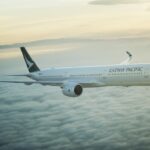
Under the terms of Cathay Group’s partnership with Airbus, the two companies will work to identify, evaluate and invest in projects that support the scaling of SAF production towards 2030 and beyond. Projects will be assessed based on their commercial viability, technological maturity and potential for long-term offtake.
“SAF remains the most important lever for Cathay and the wider aviation industry to drive towards our common decarbonisation goals,” said Cathay’s Chief Operations and Service Delivery Officer, Alex McGowan.
“This co-investment partnership underscores our commitment to supporting a more scalable SAF industry in the near term. It complements our broader strategy of investing in the technologies and production capacity that can transform the industry in the long run, including our participation in the recently launched oneworld BEV SAF Fund. Meanwhile, we are also expanding SAF usage today through partnerships with like-minded organisations.”
The partnership also includes collaboration to advocate for supportive SAF policies on both the supply and demand side across Asia, and aims to leverage their global experience to help shape policies that make SAF more accessible and affordable in the region.
“This agreement reflects the shared commitment of Airbus and Cathay to make a real difference,” commented Anand Stanley, Airbus President, Asia Pacific. “The production and distribution of affordable SAF at scale requires an unprecedented cross-sectoral approach. Our partnership with Cathay is a concrete example of how we catalyse production in the most suitable locations to serve our customers.”
Under Thailand’s transition to sustainable aviation practices and reduce carbon emissions in line with international standards, the newly-introduced SAF mandate will align with plans to primarily use HEFA technology and feedstocks such as used cooking oil initially. The government is establishing an excise tax framework to encourage SAF production and make it cost competitive with conventional jet fuel. This includes tax incentives for companies producing SAF from agricultural waste and other sustainable sources.
Major domestic companies like Bangchak Corporation and PTT Global Chemical are actively developing SAF production facilities. The former is building a HEFA-based plant with a capacity of 1 million litres per day and is scheduled to begin commercial production this year. PTT Global Chemical is already producing SAF through HEFA co-processing, with an initial capacity of nearly 16,500 litres per day.
According to a paper submitted to ICAO by Thailand last year, the Civil Aviation Authority of Thailand has initiated a MoU in collaboration with eight Thai airlines to support SAF deployment. Under the MoU, all signatory airlines commit to ensuring that the proportion of SAF is at least 1% of the total fuel consumed in international flights between states participating in CORSIA for both 2026 and 2027.
Top photo: The EcoCeres facility in Johor, Malaysia

Christopher Surgenor
Editor


More News & Features
EASA reports 2025 supplies of SAF exceeded first year of EU mandate
United and FedEx sign agreements to extend SAF supplies and scale up use
Cathay Pacific trials Google’s AI-powered contrail avoidance technology across its network
Nova Pangaea takes major step towards commercial-scale SAF production
COMMENTARY: Why action lags ambition among States seeking SAF mandates
Syzygy signs agreement with World Bank arm IFC to advance Latin American SAF production