


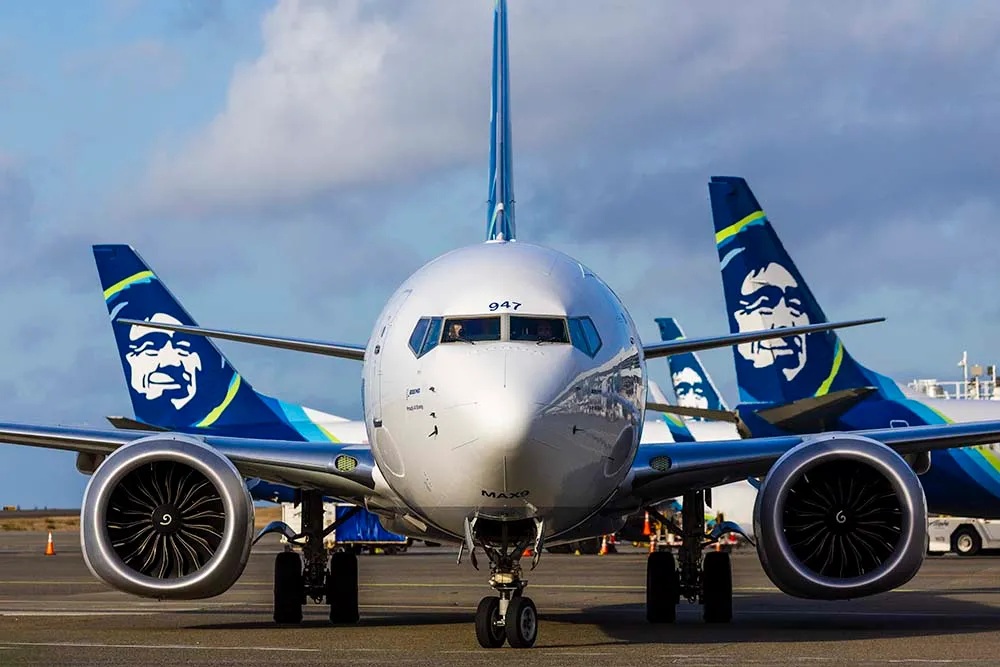
A coalition of stakeholders centred in Washington State has come together to form a new public/private partnership, the Cascadia Sustainable Aviation Accelerator (CSAA), which aims to rapidly accelerate the production, deployment and adoption of sustainable aviation fuel across the Pacific Northwest of the United States. CSAA’s work, says its members, will simultaneously support aviation’s decarbonisation objectives while building economic resilience for aviation and securing the region “as the next global hub for sustainable aviation”. In partnership with the Washington State Department of Commerce, CSAA will be funded through a 2025 State of Washington appropriation and a private philanthropic donation of an additional $10 million. Partners include Alaska Airlines and its subsidiary Hawaiian Airlines, Boeing, Washington State University, Pacific Northwest National Laboratory, Amazon, Earth Finance and Port of Seattle.
Cascadia has set a goal to reach 1 billion gallons of annual SAF production in the Pacific Northwest by 2035, which could abate around 7.5 million tonnes of CO2, say the partners.
CSAA pledges to offer targeted support to help producers overcome systemic barriers to scaling SAF. “Our shared services model streamlines access to infrastructure, energy, partners and financial capital – laying the foundation for a thriving, regional SAF ecosystem,” says its website. It aims to help airlines increase SAF availability, reach cost parity with fossil fuel quicker “and unlock unique partnership opportunities”.
Priorities will include derisking capital and structuring offtake partnerships, as well as partnering with producers and coalition members to establish and strengthen SAF and Clean Fuel Standard policies.
It will also connect producers to clean electricity and green hydrogen sources to power regional SAF production; coordinate with infrastructure partners to expand blending terminals and explore co-location opportunities with clean energy hubs; and provide access to shared laboratories to lower R&D costs and accelerate SAF commercialisation for all producers.
“Sustainable aviation fuel puts the Cascadia region at the forefront of the next major chapter of the clean energy transition that will shape how the world is powered,” commented State of Washington Governor Bob Ferguson. “This is the opportunity to do for clean fuels what this region did for the technology economy, creating lasting economic growth and leading the global effort to cut aviation emissions.”
Added Diana Birkett Rakow, CEO of Hawaiian Airlines and who leads Alaska Air Group’s sustainability and venture investment strategies: “We are committed to this journey to reduce carbon emissions for a more sustainable future for aviation, and while we are proud to be the most fuel-efficient premium US carrier, SAF remains the biggest lever for us to meaningfully lower our emissions and reach our decarbonisation goal.
“We’re thrilled to be a founding partner of CSAA because regional, cross-sector efforts like this are critical to align policy with public and private investment to identify and invest in the right technologies, and to incentivise and scale local production.”
Elsewhere, the Group announced in December that it had joined with energy producer Par Hawaii to invest in pioneering the development of SAF in Hawaii, using locally grown agriculture feedstock. They will partner with private natural resource conservation company Pono Pacific, through its Pono Energy subsidiary, to study camelina as a multi-purpose crop that can be used as a SAF feedstock. Alaska and Hawaiian will be the launch SAF customer, with plans to take delivery of Hawaii’s first locally-produced SAF during 2026.
“We are grateful to have partners like Par Hawaii and Pono Pacific, who share our commitment to making our operations more sustainable while creating a new fuel industry and strengthening Hawaii’s energy independence,” said the airlines’ Sustainability Innovation Director, Alanna James.
In 2023, in partnership with Chooose, Alaska Airlines became the first US passenger airline to offer its Atmos Rewards loyalty members the ability to earn status points by helping offset carbon emissions through SAF contributions when booking a flight. It reports more than 80,000 customers have participated over the past two years.
Photo: Alaska Airlines

Christopher Surgenor
Editor


More News & Features
EASA reports 2025 supplies of SAF exceeded first year of EU mandate
United and FedEx sign agreements to extend SAF supplies and scale up use
Nova Pangaea takes major step towards commercial-scale SAF production
COMMENTARY: Why action lags ambition among States seeking SAF mandates
Syzygy signs agreement with World Bank arm IFC to advance Latin American SAF production
Asian SAF supply and feedstock deals signed in China and Vietnam