

Syzygy Plasmonics has entered into a framework agreement with the International Finance Corporation (IFC), the private sector arm of The World Bank Group, to support the development of a pipeline of SAF projects across Latin America. IFC will provide technical and advisory services as Syzygy advances individual projects and the framework establishes a pathway for further collaboration as the US-based SAF developer scales its SAF platform across the region. By combining its proprietary light-driven technology with Latin America’s abundant renewable energy resources, Syzygy says it is aiming to accelerate the commercialisation of SAF in emerging markets. The first project supported under the agreement is NovaSAF-1, a planned commercial-scale SAF facility in Durazno, Uruguay.
Rather than relying on conventional fossil-fuel heat, Syzygy’s technology, called NovaSAF, uses renewable electricity to power light-driven reactors that convert biogas into SAF, a process the company claims can reduce lifecycle greenhouse gas emissions by up to 90% compared with conventional jet fuel. NovaSAF-1 would be the first commercial deployment of the technology.
The project completed FEED in December 2025, with detailed engineering now underway and is “FID-ready”, reports the company. First production of SAF is targeted for Q2 2028, with ambitions for facilities located globally. Trafigura has signed a binding offtake agreement covering the full production of NovaSAF-1 as well as a capacity reservation agreement for future SAF production from its future planned facilities. In June, Syzygy entered into a similar agreement with jet fuel supplier World Fuel Services.
The company has also secured feedstock agreements with a number of partners, including Estancias del Lago in Uruguay and Geo Bio Gas & Carbon, a large sugarcane and ethanol waste to biogas developer and operator in Brazil. Syzygy has set a target of up to one million tonnes of annual SAF production capacity in Brazil by 2035.
“The transition to lower-carbon aviation will depend on technologies that are not only innovative, but commercially viable and scalable,” said Raphaël Eskinazi, IFC Regional Investment Manager for Manufacturing and Forests in Latin America and the Caribbean, commenting on the framework agreement with Syzygy.
“IFC’s role is to help bridge that transition: supporting pioneering projects that can mobilise private capital, demonstrate new business models and create pathways for broader market adoption across emerging economies.”
Responded Trevor Best, co-founder and CEO of Syzygy Plasmonics: “IFC’s involvement is a strong signal that Syzygy is poised to disrupt the market; we have the technology, the project pipeline and the commercial agreements that underpin it. IFC’s role in helping innovative technologies become commercially viable and replicable across emerging markets matches the ambition of our NovaSAF build-out.”
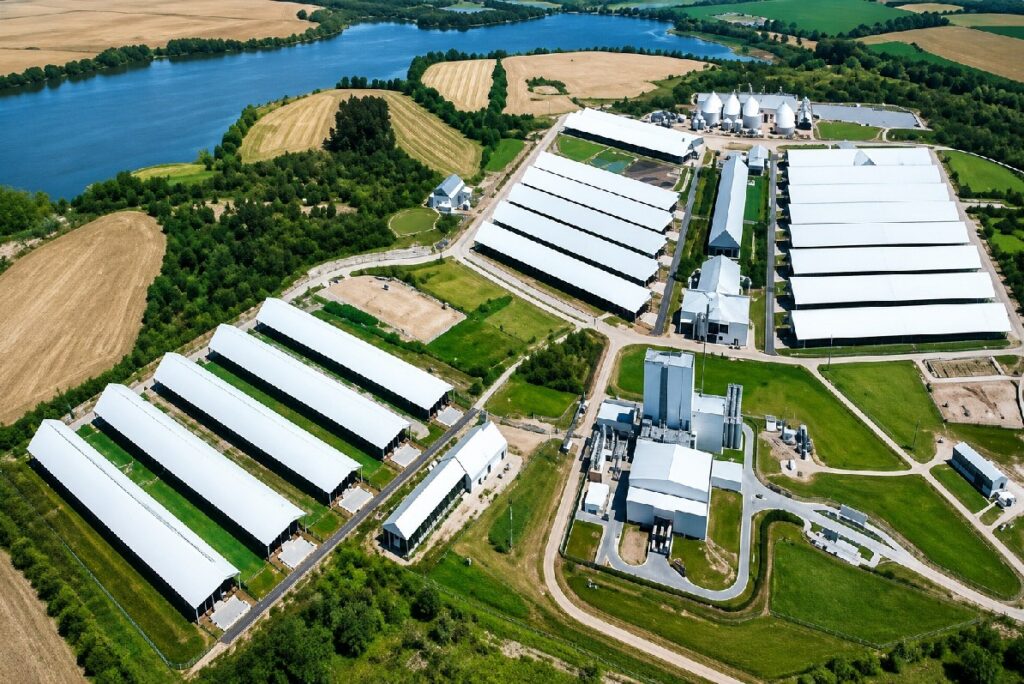
Photo: The Estancias Del Lago powdered milk plant in Uruguay which will provide the biogas for Syzygy’s NovaSAF-1 facility

Christopher Surgenor
Editor



More News & Features
Synthetic aviation fuel projects advance in Europe, Africa, US and China
Over €400m in free EU ETS allowances given to airlines in 2025 to support SAF uptake
EASA reports 2025 supplies of SAF exceeded first year of EU mandate
United and FedEx sign agreements to extend SAF supplies and scale up use
Nova Pangaea takes major step towards commercial-scale SAF production
COMMENTARY: Why action lags ambition among States seeking SAF mandates