
Heathrow has increased its incentive scheme to drive up use of sustainable aviation fuel at the airport by setting a new target that aims for an uplift of 5.6% in 2026, which is 2% higher than that required under the UK’s SAF mandate. This would equate to around 350,000 tonnes of SAF to being used over the course of the year, and Heathrow is making available £80 million ($110m) to help airlines bridge the cost gap with conventional jet fuel. In other UK SAF developments, LanzaTech has announced the intended location in northeast England for its £600 million ($800m), 80,000-tonne SAF project, which is expected to be operational in 2030. Integrated energy services provider Kent says it has begun the Pre-FEED study for Equilibrion’s Eq.flight eSAF demonstration plant, while Carbon Neutral Fuels has selected Johnson Matthey and Honeywell UOP to supply key technology for its eSAF project in northwest England.
Heathrow’s carbon cutting SAF incentive programme is now into its fifth year and the investment is designed to unlock higher levels of SAF use across the airport and position itself as a global leader in the use of alternative fuels. If the 5.6% uplift is achieved, the use of SAF has the potential to reduce carbon emissions by around 600,000 tonnes, estimates Heathrow, the equivalent of more than 950,000 economy class round trip flights between Heathrow and New York JFK.
The UK’s hub airport is aiming to progressively increase the uplift of SAF to make up 11% of all jet fuel use by 2030, so going beyond the government mandate of 10% across the UK.
Under its 2026 incentive scheme, Heathrow collects the ‘incentive pot’ through its departing passenger charge and then is redistributed back to participating airlines through credits to the airline’s Heathrow charges account. The incentive is calculated by reference to reducing the premium price gap by 50%. For 2026, Heathrow has assumed the premium to be £1300 ($1750) per tonne, so will incentivise SAF delivery to the airport on the basis of £650 per tonne up to a maximum cap. A separate pot is available to cargo operators.
“Heathrow is leading the way globally, with 17% of the world’s SAF supply in 2024 used at the airport,” claimed Matt Gorman, Director of Sustainability. “SAF is a key lever on aviation’s journey to net zero by 2050, and a key element of Heathrow’s Net Zero Plan. Our incentive delivers real progress today, as well as a future promise for tomorrow.”
Meanwhile, a number of proposed advanced technology sustainable aviation fuel projects in the UK have signalled recent progress.
LanzaTech has announced its DRAGON II project to produce SAF and renewable diesel will be located at the Saltend Chemicals Park in Humberside, with the facility supporting around 300 skilled jobs during construction, which is scheduled to start in the second half of 2027, and 150 in operation. The site, which has deep-water jetty access, is owned by px Group, part of the Ara Partners portfolio of companies specialising in industrial decarbonisation investments.
“We selected the px Saltend Chemicals Park because it offers exceptional infrastructure for SAF production and the future prospect for hydrogen and CO2 pipelines and storage,” said Jim Woodger, LanzaTech Managing Director for EMEA and Americas.
Responded Geoff Holmes, CEO of px Group: “This major investment from LanzaTech demonstrates Saltend’s continued attractiveness for world-first, low-carbon projects. Our plug-and-play models, deep technical expertise and unmatched site infrastructure allows pioneers like LanzaTech to deploy innovative projects at speed and scale.”
Producing 80,000 tonnes of SAF per year would represent around 1% of UK jet fuel requirements, says LanzaTech. Project DRAGON (Decarbonising and Reimagining Aviation for the Goal of Netzero) features two complementary initiatives that both use sister company LanzaJet’s alcohol-to-jet process – DRAGON I in Port Talbot, South Wales, and DRAGON II in Humberside.
LanzaTech also plans to produce 50 kilotonnes of the ethanol to be processed at these facilities from sites in Milford Haven and Saltend using LanzaTech’s gas fermentation technology. This will convert waste CO2 and green hydrogen into ethanol to produce a power-to-liquid (PtL) SAF. However, says LanzaTech, the use of green hydrogen is dependent upon amendments to current rules for SAF production due to the high cost of the hydrogen required.
In July 2025, LanzaTech was awarded a £6.4 million grant from the UK Department for Transport’s Advanced Fuels Fund to help accelerate the two DRAGON projects.
Another beneficiary from the fund’s latest window was Equilibrion, which, in collaboration with Kent, was awarded a grant of £1 million for its Eq.flight project in Hull. The DfT funding will be used towards the delivery by Kent of the pre-Front-End Engineering Design (pre-FEED) phase.
The project is developing a demonstration plant that uses solid oxide electrolysis, reverse water-gas shift and Fischer-Tropsch synthesis technology to convert direct air capture CO2, local heat sources and nuclear electricity into SAF. The demo plant will simulate these energy inputs to validate system performance and operational integration ahead of future commercial projects.
The nuclear-powered integrated system is designed for continuous operation without reliance on backup generation or large-scale storage to offer, says Kent, a pathway to efficient and secure domestic SAF production.
“With stronger policy support now in place in the UK, the opportunity for projects like this to move towards commercial reality is growing,” said the company’s Managing Director UK, Les Newman. “Through our work in the Rise coalition, we’ve seen the importance of aligning technology, policy and industry capability, and Eq.flight brings those elements together in a compelling way. Our team is ready to apply its experience in low-carbon process engineering and we look forward to working with Equilibrion and the wider consortium as the project progresses.”
The project aims to produce its first compliant SAF by 2030 and demonstrate feasibility ahead of potential co-location with future nuclear projects such as the Rolls-Royce Small Modular Reactor.
Equilibrion’s co-founders Caroline Longman and Phil Rogers, who both have backgrounds in the nuclear sector, said the project would bring advance electrolysis and synthesis technologies together “in a way that hasn’t been demonstrated in the UK before.”
They added: “The insights gained through this phase will be critical in shaping future commercial projects. With support from our partners, including Kent, we’re well-placed to deliver a robust and informative demonstration system. Our consortium is committed to accelerating the UK’s transition to domestically produced sustainable aviation fuels, strengthening energy security while enabling airlines to meet future SAF requirements.”
Another grant – this time £6 million – from the July 2025 Advanced Fuels Fund competition was awarded to Carbon Neutral Fuels (CNF), whose Project Starling in Workington, northwest England, aims to convert captured carbon dioxide and water into synthetic kerosene. It is claimed to be the first project in the country to evaluate the use of wastewater as a feedstock for SAF production.
Construction of the power-to-liquid facility is planned to begin in 2028, with production of up to 25,000 tonnes of blended eSAF annually targeted from 2031.
CNF has announced the selection of Johnson Matthey and Honeywell UOP as technology partners for the project. Johnson Matthey will deploy bp’s FT CANS technology to convert synthesis gas derived from captured carbon dioxide into a synthetic crude oil. This intermediate product is then upgraded using Honeywell’s FT Unicracking technology to produce synthetic kerosene suitable for SAF blending.
“By working with world-class technology partners such as Johnson Matthey and Honeywell, we are building a facility capable of delivering more than 95% lifecycle emissions savings compared with conventional jet fuel, while helping to establish the UK as a leader in sustainable e-fuels,” said Sophie Zienkiewicz, Co-founder of Carbon Neutral Fuels.
Commented Alberto Giovanzana, Managing Director, Licensing at Johnson Matthey: “Deploying FT CANS technology at Project Starling demonstrates how advanced process and catalyst solutions can enable the next generation of sustainable aviation fuels.”
Added Honeywell UOP’s President, Rajesh Gattupalli: “Our FT Unicracking technology is designed to provide flexibility, efficiency and cost effective upgrading of synthetic feedstocks into high quality transportation fuels.”
CNF also has a methanol-to-jet project, called ASAPMTJ, in development that is currently at the pre-FEED stage. It is targeting production of more than 200,000 tonnes of SAF per year.
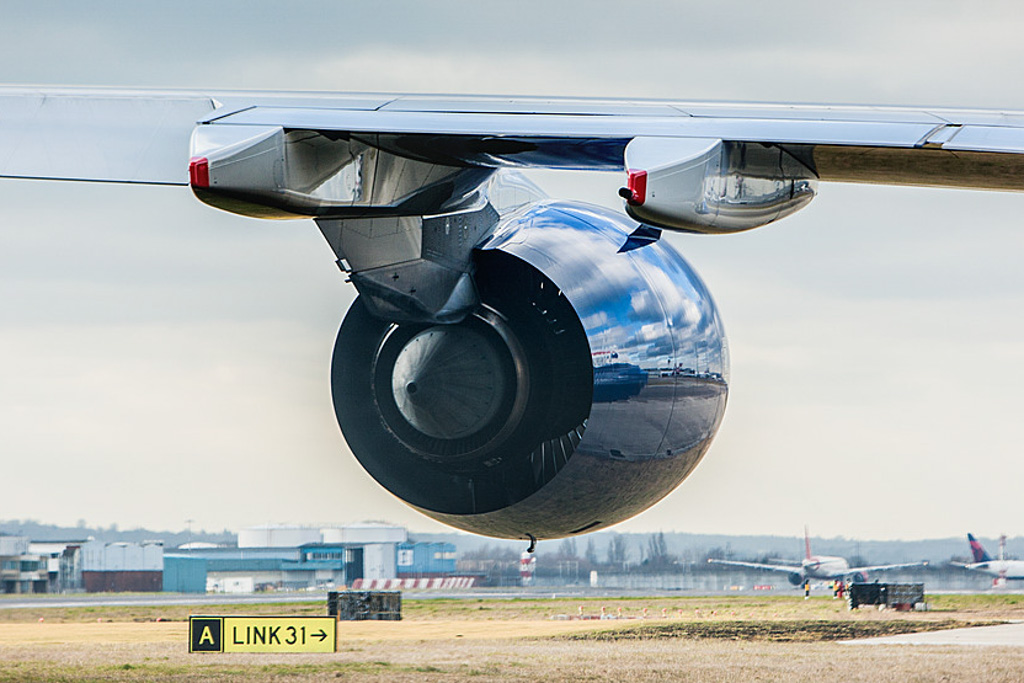
Photo: Heathrow Airport

Christopher Surgenor
Editor


More News & Features
Synthetic aviation fuel projects advance in Europe, Africa, US and China
Over €400m in free EU ETS allowances given to airlines in 2025 to support SAF uptake
EASA reports 2025 supplies of SAF exceeded first year of EU mandate
United and FedEx sign agreements to extend SAF supplies and scale up use
Heathrow expansion incompatible with climate targets, advises UK government watchdog
Nova Pangaea takes major step towards commercial-scale SAF production