
Brazil is a major emerging economy that has yet to sign up to the compliance phase of UN agency ICAO’s carbon scheme, CORSIA. And yet the country, rich in natural resources and a leading environmental power, has the potential to play an important role in Article 6 carbon markets and to supply airlines with much-needed eligible credits to meet their obligations under CORSIA. International legal expert and former Brazilian foreign trade minister Welber Barral argues that by not joining the evolving global scheme, as imperfect as it is, Brazil risks becoming a rule-taker rather than a rule-maker. He calls for clear CORSIA participation, credible authorisation procedures and a domestic carbon market framework capable of supplying units that meet both ICAO and, where needed, EU expectations.
There is a recurring lesson in the history of international trade: the grandeur of diplomatic rhetoric eventually withers away when it meets the cold reality of daily market demands. For years, global climate policy lived in the rarefied air of summitry and non-binding pledges. In 2026, the era of voluntary climate rhetoric hit the hard wall of compliance.
As airlines enter the first-phase compliance cycle under ICAO’s Carbon Offsetting and Reduction Scheme for International Aviation (CORSIA), the industry is discovering that climate diplomacy ends when cancellation reports begin. The global carbon market is discovering – with a sense of mounting urgency – that theoretical supply is not the same as tradable, risk-mitigated credits.
The challenge is institutional and deeply legal. Projects that exist on paper, baselines that have been drafted in consultancy offices and methodologies approved by technical panels are finding the pipeline to market narrows dramatically once host-country politics and Article 6 accounting enter the picture. For large emerging economies, this represents a strategic crossroads. They can treat these rules as a marginal, confusing obligation for our carriers, or they can recognise CORSIA for what it is: the testing ground for the new climate economy.
CORSIA was designed as the flagship of sectoral climate cooperation, a mechanism to channel private capital into mitigation projects while allowing the aviation sector to manage its growth. However, instead of a seamless flow of capital, the market is currently grappling with the plumbing of the Paris Agreement. Under Article 6, a carbon credit only becomes safely usable for CORSIA when it clears two formidable sovereign hurdles: the Letter of Authorization (LoA) and the corresponding adjustment (CA).
The LoA is the host government’s formal consent to a project’s participation in the international market. But the corresponding adjustment is where the true sovereignty trade-off occurs. By agreeing to a CA, a country must consider it in its NDC accounting balance. It is a decision to prioritise export revenue today over the ease of meeting national climate targets tomorrow.
Without both steps, the spectre of double-counting looms over CORSIA-bound transactions. International investors, who are naturally allergic to legal unpredictability, are beginning to hesitate. The market is likely to see a widening gap between optimistic supply forecasts and the much smaller pool of credits that can actually be insured and financed. While smaller nations like Ghana or Rwanda have moved with surprising agility to publish transparency reports and experiment with these adjustments, larger emitters remain caught in a defensive crouch, fearing that granting early authorisations might erode their strategic room for manoeuvre in future negotiations.
The risk of a tiered market
Into this technical uncertainty, Brussels has inserted its regulatory pressure. Draft criteria released by the European Commission suggest a preference for the UN’s Article 6.4 mechanism as the preferred standard, while simultaneously casting doubt on high-forest, low-deforestation and jurisdictional REDD+ schemes. In practice, this means that much of the Phase One supply that developers expected to channel into CORSIA could be ruled out for European airlines.
This creates a clear and present risk of a fragmented, multi-tier market – a zigzag of regulations that creates winners and losers based on geography rather than mitigation quality. On the first tier, we find voluntary offsets with no sovereign backing; on the second, Article 6 credits with host-country approval; and at the very top, a narrow, expensive band of EU-compliant units.
For European carriers, this fragmentation is a recipe for higher prices and thinner liquidity than for their global competitors. For host states like Brazil, it presents a dilemma: should Brazil tailor its entire national architecture to meet Brussel’s shifting expectations, or to seek a more diversified portfolio? In international trade, such fragmentation is a clear invitation for market distortion, where developers and host states simply sell to whoever is willing to pay more with fewer restrictions.
Yet, if the Commission extends the EU Emissions Trading System to extra-EEA flights, or at least to departing flights from Europe, this would create a serious risk of regulatory fragmentation. For flights between Europe and Brazil, it would increase the pressure on Brazilian carriers and could also affect the economics of long-haul routes. Here, Brazil and others should not treat the possible EU move merely as unilateral overreach. It should treat it as a warning.
The best response is not nationalist irritation, but regulatory preparedness: clear CORSIA participation, credible authorisation procedures and a domestic carbon market framework capable of supplying units that meet both ICAO and, where needed, EU expectations.
The danger of regulatory slow motion
There is a growing belief in market reports that insurance can act as the final bridge between political risk and market appetite. While insurance is vital, it is no panacea. Capital is cowardly – providers naturally gravitate toward jurisdictions with clear carbon laws, accessible authorities and enforceable contracts. There is unlikely to be global capital or risk appetite to underwrite every CORSIA-eligible credit worldwide.
This imbalance will inevitably reward the countries that move fastest to demonstrate legal certainty. If Brazil remains in a state of regulatory slow motion, capital will not wait. It will flow towards more predictable, albeit smaller, markets in Asia or Africa. In the end, the grandeur of being a leading environmental power means little if the contractual framework is too brittle to support investment.
Brazil stands at this crossroads with a competitive edge that is far broader than most international observers realise. Its advantage is not just the Amazon; it is the vast renewable energy matrix, the agricultural mitigation potential and an emerging domestic carbon market architecture, exemplified by legislation such as the Combustível do Futuro (Fuel of the Future) legislation. Properly harnessed, these assets can anchor a diversified portfolio of credits, spanning nature-based solutions, industrial abatement and sustainable aviation fuel development.
In spite of this obvious interest, Brazil has not volunteered to participate in CORSIA’s first phase, which is somewhat paradoxical given the country’s potential role as a major supplier of high-integrity mitigation outcomes. This hesitation reflects three factors: first, a concern over preserving flexibility in Brazil’s own NDC accounting; second, the still-incomplete domestic architecture for authorisations, corresponding adjustments and carbon market governance; and third, the absence, so far, of sufficient pressure from domestic aviation stakeholders. The implication is that Brazil risks entering the system late, as a rule-taker rather than a rule-maker.
To seize this moment, Brasília should act on four strategic fronts:
• Legislative durability: Brazil must finish the pending legislation to define the national carbon market through clear, stable legislation. Investors need to know exactly who has the authority to sign a Letter of Authorization, on what terms, and how those decisions interact with Brazil’s own net-zero trajectory. Ambiguity is an invisible tax on investment.
• Transparency as market access: Biennial transparency reports should be treated as a strategic marketing tool, not an onerous administrative chore. Early and detailed reporting on corresponding adjustments would signal to global climate finance that Brazilian credits are not just high in volume, but high in integrity. This is the most direct way to attract buyers and insurers who are currently scanning the globe for reliable partners.
• Disciplined portfolio management: In a world of increasingly selective buyers, scarcity backed by rigorous accounting is what commands the highest price. Interested stakeholders should shape segments of Brazil’s supply to meet the stricter EU standards while maintaining other channels for non-EU buyers and the voluntary market.
• Domestic carrier engagement: Brazilian airlines should move beyond a compliance-only mindset. Early participation in CORSIA can help shape the very standards that will eventually govern the sector. If companies wait for perfect clarity, they will find themselves as rule-takers in a system designed by others.
The cost of estrangement
CORSIA is undoubtedly an imperfect and evolving mechanism. Yet, it is also the most visible laboratory for how international trade will function in a decarbonising world. Countries that use this moment to prove their governance, their data reliability and their contractual stability will be well-placed to sell mitigation outcomes into any future regime, regardless of what Brussels or ICAO decide next.
If Brazil insists on treating CORSIA as a marginal irritation or a nationalist grievance, the result will not be a defence of sovereignty. It will be estrangement: a slow loss of relevance, a loss of influence over global standards and, ultimately, a loss of market share to more agile competitors.
In international trade, distance from the rules almost always leads to a loss of relevance. Brazil has the resources to be a rule-maker in the carbon markets of the 21st century. The invitation is on the table – the only question is whether Brasília chooses to answer it now. Or watch as others define the future of decarbonisation.

About the author
Welber Barral
With over three decades of experience in international trade law, foreign investment and strategic legal consulting, Welber Barral is a Partner at Barral Parente Pinheiro Advogados in Brasília. He is an arbitrator for the World Trade Organization, Mercosur and the UK Dispute Resolution System. Barral served as Secretary of Foreign Trade at the Brazilian Ministry of Development, Industry and Commerce, and has a PhD in international law.
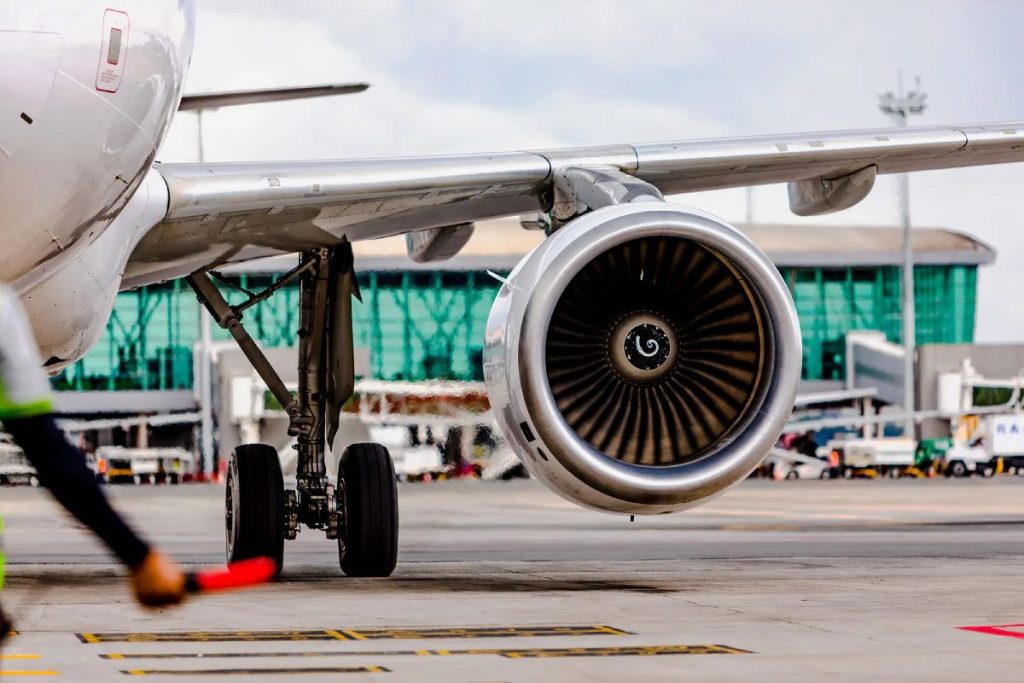
Photo (Felipe Menezes, Inframerica): Brasília International Airport
Views expressed in Commentary op-ed articles do not necessarily represent those of GreenAir.

More News & Features
Over €400m in free EU ETS allowances given to airlines in 2025 to support SAF uptake
COMMENTARY: Why action lags ambition among States seeking SAF mandates
Syzygy signs agreement with World Bank arm IFC to advance Latin American SAF production
Commission proposes a limited extension of the ETS to international departing flights from Europe
Extending the EU ETS to all international flights departing Europe could raise $10bn a year, finds ICCT study
ANALYSIS: What an expanded EU ETS coverage could mean for airlines