
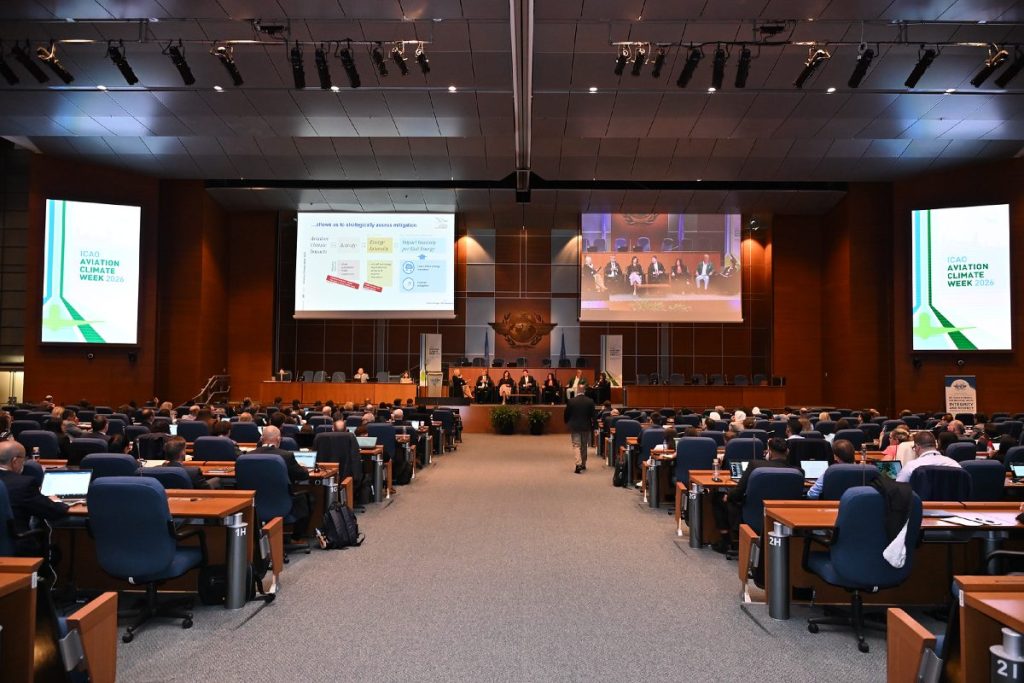
Immediate, harmonised and inclusive global action is required to demonstrate progress is accelerating towards climate goals and that net zero carbon emissions from international civil aviation will be achieved by 2050, said ICAO Council President Toshiyuki Onuma at the opening of ICAO Aviation Climate Week in Montreal. This will require deepening global commitment to drive advances in technology and policy, financial support where needed, and increased investment and stronger implementation by all States, he added. The meeting brings together industry and government representatives to discuss the sector’s most serious challenges, such as scaling cleaner aviation fuels, financing the net zero transition and implementation of ICAO’s CORSIA carbon scheme. On the first day, ICAO and airline trade body IATA announced enhanced cooperation on tracking progress and accelerating development and deployment of sustainable aviation fuels.
“The 42nd session of the ICAO Assembly [in 2025] supported ICAO commitments to carbon neutral growth from 2020, a five per cent emissions reduction using aviation cleaner energies by 2030 and, of course, the net zero by 2050 imperative in support of the Paris Agreement temperature goals,” Onuma told delegates in the keynote address.
“Global cooperation and harmonised action are essential to meeting these goals, with ICAO providing clear direction and certainty for all stakeholders.
“Air transport is setting an example for other industries to follow. Through decisive leadership and a shared commitment to climate action, we will ensure a vibrant future for flight.”
He said SAF and cleaner energy sources, which are expected to supply more than half of the reductions required to reach net zero by 2050, are already playing a central role, and ICAO had launched global and regional initiatives, such as ACT-SAF and the ICAO Finvest Hub, in support. ICAO is planning to hold its Fourth Conference on Aviation and Alternative Fuels (CAAF/4) in 2028, which will review progress towards the 2030 vision and help set new future targets, announced Onuma.
Participation in ICAO’s market-based measure, CORSIA, had now grown to 130 States, with reporting covering 99% of international aviation emissions, he said, adding: “With CORSIA’s second phase fast approaching, we must now review lessons learned so far and identify how we can further strengthen both the scheme and the international cooperation it requires.
“Indeed, broadening State participation and deepening the implementation of all ICAO mechanisms remain priorities. Our collective success depends on both.”
As well as SAF and CORSIA, sessions at Aviation Climate Week will cover the latest aviation industry developments in aircraft technology, infrastructure and operations; science and academic research; and relevant ICAO and global initiatives. The meeting will also address monitoring and reporting of CO2 emissions reductions towards the ICAO net zero Long-Term Aspirational Goal (LTAG), the latest research on non-CO2 impacts, taxation, and climate adaptation and resilience.
The agreement between ICAO and IATA will explore how SAF registries and the data they collect can support the implementation of the LTAG Monitoring and Reporting methodology, as well as the consideration of fuel accounting systems for international aviation.
“Credible tracking is necessary to know the emissions reductions delivered by SAF. The data collected by the CADO SAF Registry, among others, has the potential to meet this need,” commented Willie Walsh, IATA’s Director General. “By working with ICAO to strengthen how progress on SAF use is measured and reported, we can accelerate deployment, build trust across stakeholders and put aviation on track for net zero by 2050. This will set a great example for individual States to work with industry to make the most of the SAF data that is being accumulated.”
Added Juan Carlos Salazar, ICAO Secretary General: “Achieving ICAO’s vision of net zero carbon emissions from international aviation by 2050 will require unprecedented levels of transparency and cooperation across the entire sector. This agreement will support the strengthening of ICAO’s leadership as we support States and industry in their scaling up of sustainable aviation fuels and other aviation cleaner energies. By improving our global monitoring capabilities and visibility into SAF production, distribution and use, we can support the integrity of global fuel accounting systems and ensure that climate investments are recognised consistently and transparently under ICAO frameworks.”
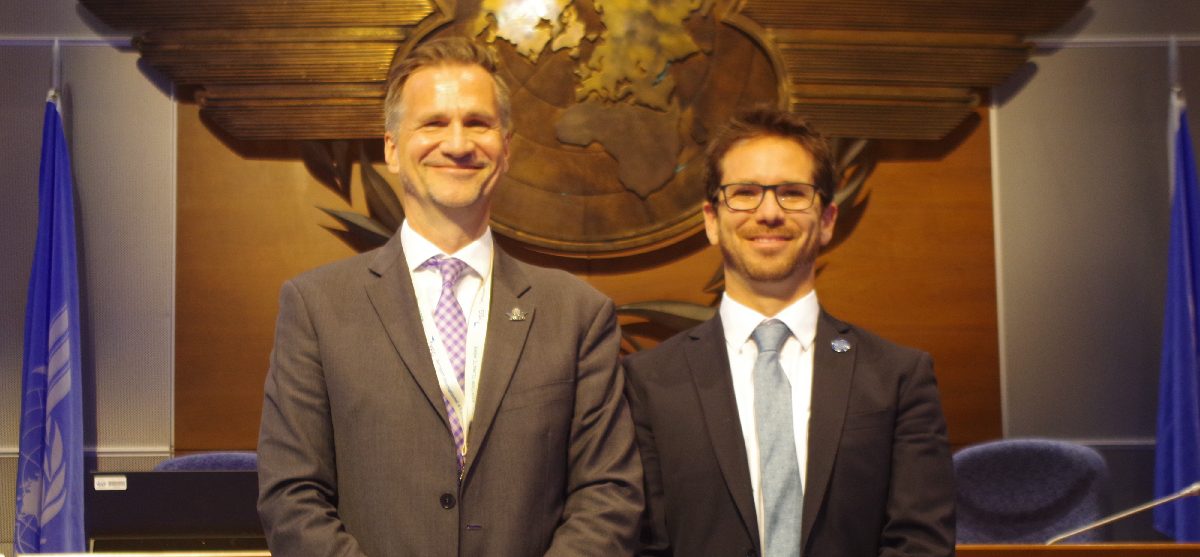
Michael Schneider of IATA (left) and Dr Alejandro Block of ICAO (right) announce the SAF reporting agreement

Christopher Surgenor
Editor


More News & Features
Synthetic aviation fuel projects advance in Europe, Africa, US and China
Over €400m in free EU ETS allowances given to airlines in 2025 to support SAF uptake
EASA reports 2025 supplies of SAF exceeded first year of EU mandate
United and FedEx sign agreements to extend SAF supplies and scale up use
Heathrow expansion incompatible with climate targets, advises UK government watchdog
Nova Pangaea takes major step towards commercial-scale SAF production