


Chicago-based Syntholene says it is about to complete construction in Húsavik, Iceland, of a geothermally-integrated, high-temperature electrolysis demonstration facility for synthetic fuel production. The company is seeking to commercialise its proprietary Hybrid Thermal Production System for low-cost, clean-fuel synthesis, with a target to produce “ultrapure” synthetic jet fuel at 70% lower cost than today’s nearest competing technology. Once operations commence at the facility, Syntholene expects effects testing and real-world data gathering to begin shortly thereafter, with initial efficiency and techno-economic data targeted for publication in Q4 2026. The company says it has received interest from Icelandair to supply the airline with 20,000 tonnes of fuel annually over 10 years.
Syntholene CEO Dan Sutton reported the facility is on track to finish six months ahead of schedule. “Few advanced energy projects achieve this, even at the demonstration stage, and reflects the seasoned execution capabilities of our engineering and project teams, as well as the elegance and modularity of the company’s thermal-hybrid architecture,” he said.
The facility is located in the Húsavik Power Station, a geothermal energy centre that includes heat exchangers, district heating ties, water cooling systems and a 20-kilometre insulated geothermal pipeline from the Hveravellir geothermal field. Syntholene has secured 20MW of dedicated energy to support the demo facility and commercial scale-up.
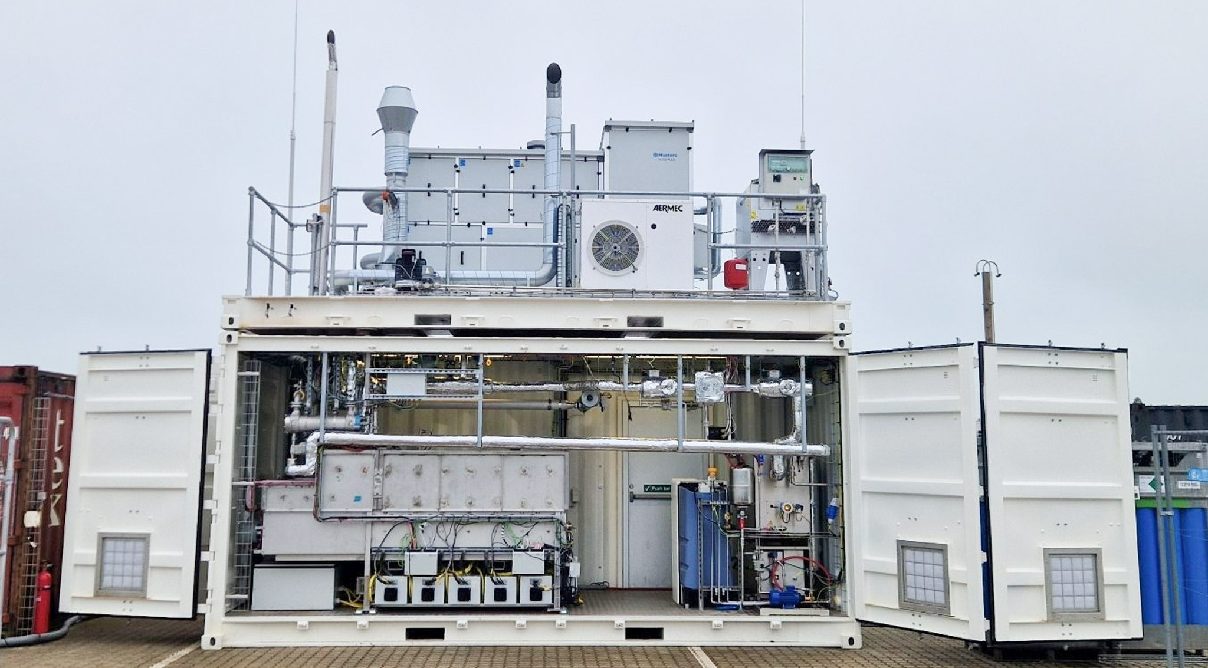
The facility has been designed to demonstrate the cost and energy efficiencies of integrating geothermal heat with high-temperature electrolysis for the production of low-cost hydrogen as the core feedstock for synthetic fuel production. It intends to validate continuous operational integration between geothermal heat infrastructure, solid oxide electrolyser cell (SOEC) hydrogen production and supporting balance-of-plant systems, says the company.
Syntholene expects data generated from the facility will support future engineering optimisation, techno-economic analysis, strategic partnerships and financing initiatives.
The company claims its fully drop-in eSAF is engineered to pure molecular kerosene that delivers superior energy density and thrust-to-weight performance compared to conventional jet fuel and biofuel alternatives.
In January, Syntholene signed a non-binding Expression of Interest with Icelandair for the purchase of 20,000 tonnes (around 25 million litres) at a price to be determined under a future fuel purchase agreement.
Sutton said partnerships were key to meeting rising demand as eSAF mandates accelerated in pivotal markets such as the EU and UK.
“The transition to sustainable aviation fuel will only happen if production is scaled up and competitive pricing ensured,” responded Icelandair CEO Bogi Nils Bogason. “Working with Syntholene aligns with our focus on proportionately reducing carbon emissions while meeting regulatory SAF mandates.”
Top photo (Icelandair): Syntholene has signed a non-binding Expression of Interest with Icelandair to supply eSAF
Bottom photo: Syntholene’s SOEC module

Christopher Surgenor
Editor



More News & Features
Synthetic aviation fuel projects advance in Europe, Africa, US and China
Over €400m in free EU ETS allowances given to airlines in 2025 to support SAF uptake
EASA reports 2025 supplies of SAF exceeded first year of EU mandate
United and FedEx sign agreements to extend SAF supplies and scale up use
Nova Pangaea takes major step towards commercial-scale SAF production
COMMENTARY: Why action lags ambition among States seeking SAF mandates