
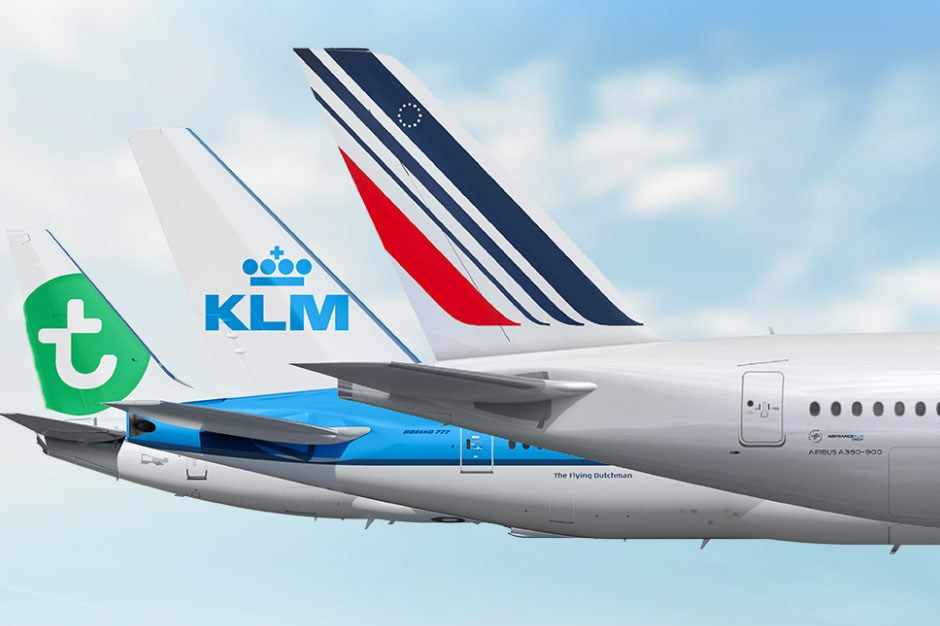
In its 2025 full-year accounts, the Air France-KLM Group has disclosed it did not achieve the sustainability performance target of a specific reduction in its GHG emission intensity from a 2019 baseline by 2025, as required under the terms of sustainability-linked bonds issued in January 2023. The cost impact for the two bonds amounts to €7.5 million ($8.7m). The group has set a SBTi-validated performance target of a GHG emissions intensity reduction of 30% by 2030 from a 2019 baseline with an interim 10% reduction goal by 2025. It blames the missed target on delays to its fleet renewal plans, engine issues and higher than expected fuel consumption due to geopolitical circumstances. On a positive note, the group reports its SAF usage more than doubled in 2025 compared to the previous year.
The bonds issued by Air France-KLM (AF-KLM) in 2023, for a nominal amount of €1 billion in two tranches, were the first by the group to be indexed against a target to reduce its well-to-wake Scope 1 and 3 jet fuel greenhouse gas emissions by 10% per revenue tonne kilometre (RTK) by 2025 compared to 2019. The bonds attracted more advantageous financing conditions if sustainability conditions were met. The proceeds of the bonds were allocated to partially redeem the outstanding bank loan guaranteed by the French state that was issued in May 2020 during the Covid-19 crisis.
“This inaugural transaction links the company’s financial strategy with its environmental objectives and represents an additional milestone in Air France-KLM’s ambition to achieve its decarbonisation targets, as a leader for a more sustainable aviation industry. As such, it represents the first public sustainability-linked bond issuance in Europe in the airline sector,” announced the group at the time.
Since then, AF-KLM says it has faced headwinds to its GHG intensity progression that include delays in fleet renewal due to supply chain constraints; engine issues with part of its new generation fleet, such as several Airbus A220s, which has not permitted them to be used to their maximum capacity; and higher fuel consumption due to longer flight times on certain routes caused by different geopolitical circumstances. It points out that it was not alone in the airline industry with these issues.
As a result of ongoing fleet renewal and investment and operational actions, the group reports in its full-year results GHG intensity for 2025 was 913 gCO2e/RTK, representing an improved 1.6% decrease compared to 2024.
It says it is continuing to take delivery of new generation aircraft such as the Boeing 787-10, Airbus A350, A320neo family, A220 and Embraer 195-E2. As at the end of December 2025, 35% of the group’s fleet consisted of new generation aircraft, up 8% on the previous year, with plans to get to 80% by 2030.
“It is unfortunate that missed sustainability performance targets on Air France-KLM’s sustainability-linked bond transactions have arisen due to geopolitical and supply chain issues. These events are often beyond an airline’s control,” commented aviation sustainable finance expert Barry Moss, Managing Director, Avocet Risk Management.
“The current Middle East crisis may lead to even longer routings and a reduction in flights and reductions in passenger demand on certain routes. This could result in adverse RPK and RTK GHG intensity targets and KPI performance. In addition to the increased cost of borrowing, higher jet fuel prices, insurance premiums and emissions costs under the EU and UK emissions trading systems and CORSIA are likely to create negative effects on airline balance sheets. If there is a silver lining, it may be that any sustained increase in the cost of aviation fossil fuels and energy security risks may encourage the regional production and uplift of SAF.”
AF-KLM reports that it incorporated 244,000 tonnes of SAF in 2025 at a total cost of €226 million ($260m), and representing 2.9% of its total jet fuel, which it highlights is well above legal mandate requirements. It has an ambition to incorporate up to 10% of SAF in 2030, exceeding the ReFuelEU 6% mandate. The group has long-term SAF offtake deals with TotalEnergies, Neste, SkyNRG and DG Fuels that cover a total of 3.5 million tonnes until 2043.
To cover the additional costs incurred by the purchase of SAF, the group introduced a specific surcharge on tickets departing from France and the Netherlands at the beginning of 2022. In addition, it has voluntary mechanisms in place to enable customers to contribute financially to the supply and use of SAF beyond the regulatory requirement. As of December 31 2025, the total amount collected was €232 million, so higher than the additional SAF costs for the year.
To meet the obligation to surrender EU ETS carbon allowances corresponding to its emissions, the group recorded a net expense of €346 million as of December 31 2025, up from €249 million in 2024 (+39%). It is expecting the carbon price to rise from €78 per tonne in 2026 to €89 per tonne in 2030 under the group’s five-year target plan. Also under the plan, the price of SAF is expected to increase from €1,231 per tonne in 2026 to €1,590 per tonne in 2030.
The group says that to minimise the consequences of “the necessary strengthening” of the European carbon market and the gradual increase in the price of credits, it is responding through a proactive financial policy based on the purchase of forward credits.
Taking all national, EU and international (CORSIA) regulatory climate measures into account, along with higher prices for sustainable fuel, the group says decarbonisation will represent added costs of “several billion euros” by 2030 for its companies.
The group’s CEO, Benjamin Smith, recently told analysts the EU’s ReFuelEU SAF regulation could force the group to slash up to 45% of its Asia network by 2030.

Christopher Surgenor
Editor


More News & Features
Synthetic aviation fuel projects advance in Europe, Africa, US and China
Air France shares results of large-scale North Atlantic contrail avoidance trial
Over €400m in free EU ETS allowances given to airlines in 2025 to support SAF uptake
EASA reports 2025 supplies of SAF exceeded first year of EU mandate
United and FedEx sign agreements to extend SAF supplies and scale up use
Transport NGOs call EU ETS aviation extension proposals a missed opportunity