
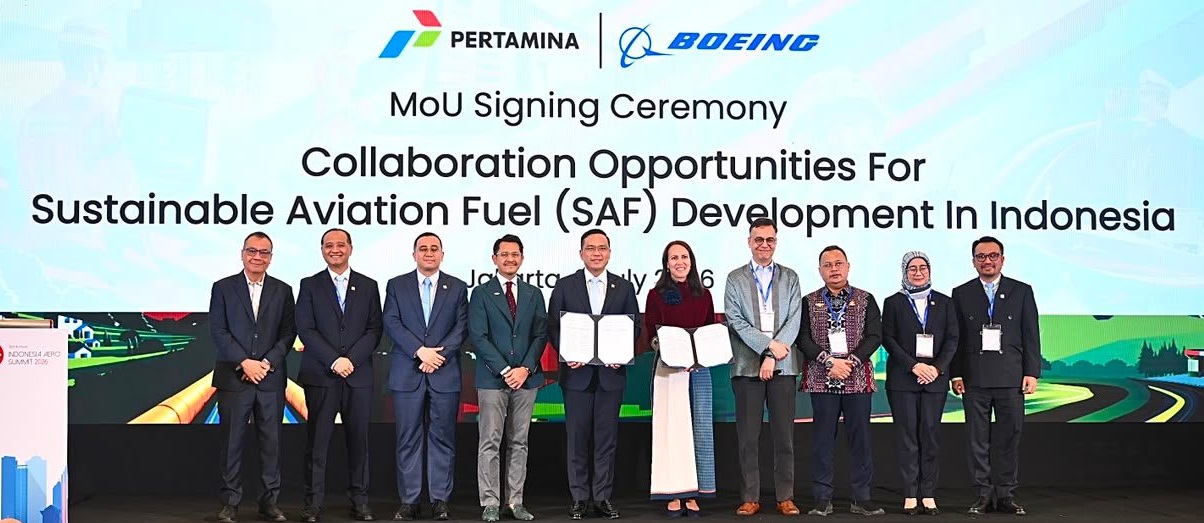
Indonesian state energy company Pertamina has signed a MoU with Boeing to explore opportunities for developing a sustainable aviation fuel ecosystem in the country. Under the agreement, the partners will collaborate on identifying potential feedstock sources, advancing technology and supporting the progress of policies needed to accelerate SAF implementation. As part of the Asta Cita strategic vision of Indonesia’s President Prabowo Subianto, SAF development is seen as a key pathway to reducing carbon emissions from the aviation sector. According to the ASEAN 2050 SAF Outlook report, the nation ranks in the top three countries in Southeast Asia for its SAF potential, with a possibility of becoming a net SAF exporter by 2040 and a surplus estimated of up to 2.2 million barrels of SAF per day by 2050.
“Indonesia is well positioned to lead the growth of sustainable aviation in Southeast Asia,” said Indra Duivenvoorde, Managing Director, Boeing Indonesia. “We look forward to working with Pertamina on a range of SAF-related activities, from identifying potential feedstocks to supporting education and training on opportunities that SAF provides to support the sustainable future of Indonesia’s aviation industry and the country’s broader economy.”
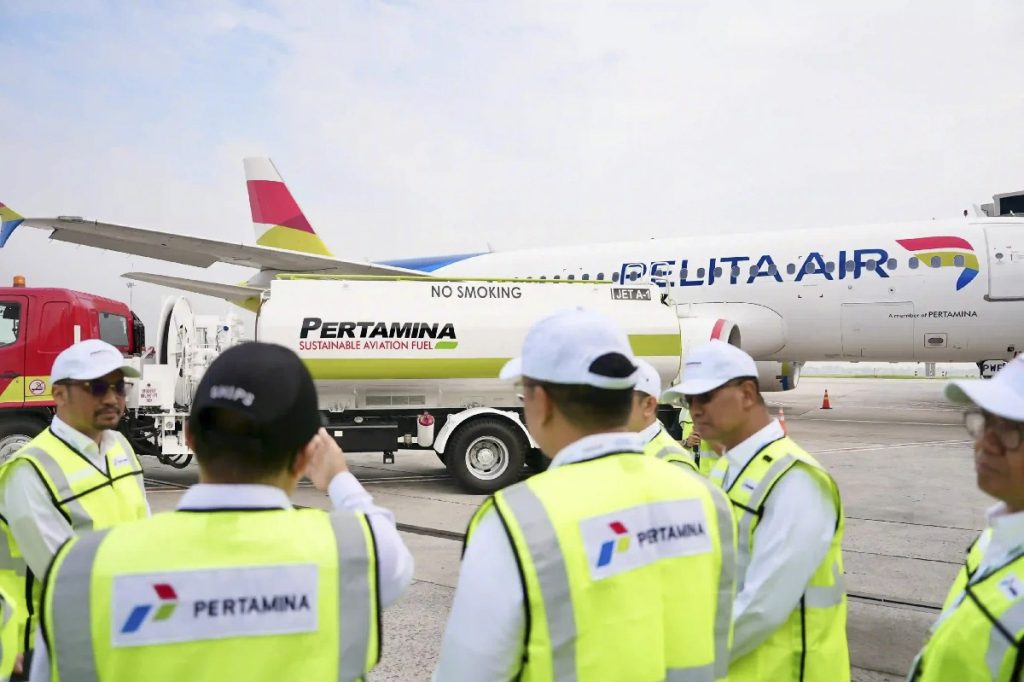
Pertamina has launched a number of initiatives as part of developing a national SAF ecosystem, including the production and certification of Pertamina SAF and its use by Pelita Air, a commercial airline subsidiary of Pertamina that is currently in the process of being divested, and the development of the Cilacap Biorefinery project by PT Pertamina Patra Niaga to produce SAF and HVO from used cooking oil and other waste-based sustainable feedstocks.
Simon Aloysius Mantiri, CEO of PT Pertamina (Persero), said the partnership with Boeing was part of a long-term investment in building a national SAF sector.
“With Indonesia’s abundant domestic resources, Pertamina’s refining capabilities and Boeing’s global aviation expertise, we are confident this collaboration will accelerate the development of a competitive SAF industry, create greater value for Indonesia’s economy and support the decarbonisation of the aviation sector,” he said.
Boeing forecasts that Southeast Asia’s passenger air traffic will increase at a 7% annual rate, with regional airlines needing 4,885 new airplanes through to 2044. It says SAF will be expected to play a key part in reducing carbon emissions from the sector.
The planemaker contributed to the ASEAN 2050 SAF Outlook Report that was published in January with support from the Canadian government and in collaboration with the ASEAN Secretariat. Its aim is to foster the development and deployment of SAF using waste feedstocks across ASEAN member states.
Its findings project rapid demand for SAF in the region, growing sharply from 15,000 barrels per day in 2030 to 142,000 bpd in 2040 and to over 700,000 bpd by 2050. Indonesia, Malaysia and Thailand are expected to be the largest demand centres. The potential SAF supply from agricultural and sustainable forestry biomass is expected to remain significant throughout the forecast period, rising from 7.5 million bpd in 2030 to 7.9 million bpd in 2040 and potentially 8.5 million bpd in 2050.
This means there would be sufficient capacity for countries in the region to be net SAF exporters, with Thailand, Indonesia and the Philippines showing the greatest surpluses after meeting domestic demand.
“Overall, the regional supply chain assessment indicated that ASEAN regional SAF supply potential significantly outpaces projected demand, highlighting Southeast Asia’s comparative advantage as a potential future SAF hub,” says the report. “This surplus capacity positions the region to have the ability to play an important role in meeting aviation’s international decarbonisation targets through SAF production and exports.”
It says policies such as SAF blending mandates or targets would likely positively support SAF demand and also improve market confidence. The establishment of an ASEAN SAF alliance could also assist with harmonising policies across countries, as well as coordinating supply, demand, certification and trading frameworks, it advises.
Top photo: Pertamina subsidiary Pelita Air operated a flight from Jakarta to Bali in August 2025 using the first SAF blend produced from UCO at the Pertamina Cilacap biorefinery
Bottom photo: Boeing and Pertamina SAF MoU signing ceremony

Christopher Surgenor
Editor


More News & Features
Synthetic aviation fuel projects advance in Europe, Africa, US and China
Over €400m in free EU ETS allowances given to airlines in 2025 to support SAF uptake
EASA reports 2025 supplies of SAF exceeded first year of EU mandate
United and FedEx sign agreements to extend SAF supplies and scale up use
Cathay Pacific trials Google’s AI-powered contrail avoidance technology across its network
Nova Pangaea takes major step towards commercial-scale SAF production