




GreenAir’s roundup of the latest news and comment from around the world on efforts by the aviation sector to decarbonise and reduce its climate impact
SAF NEWS EXTRA
July 2025
Cranfield University in the UK has signed a MoU with synthetic SAF developer CirculAIRity to work together on multiple projects to develop and improve power-to-liquid (PtL) production efficiencies. Working with Cranfield’s Centre for Digital Engineering and Design, the initiative will support CirculAIRity’s mission to offer SAF production at scale by designing and developing a digital platform to enable interoperability in engineering modelling for better decisions, with the aim to improve productivity and reliability across the supply chains in the maturing PtL SAF sector, explained the Centre’s head, Prof John Erkoyuncu. “To reach those goals, we need to strategically shape future skillsets, advance humanity’s understanding of the energy transition and deliver a commercially attractive SAF programme globally,” said Alex Chikhani, CEO and co-founder of CirculAIRity, and a Cranfield University alumnus. CirculAIRity is aiming to produce e-fuel utilising direct air capture CO2.
US SAF producer Natural States Renewables (NSR) has joined with Axens and its partner thyssenkrupp Uhde to use BioTfuel technology to produce SAF made from surplus forest biomass such as pre-commercial thinnings and slash. NSR expects to utilise a combination of feedstock, process configuration, power generation using biomass and local carbon capture storage, and capture of facility CO2 emissions to produce SAF with negative GHG emissions. NSR says its future plants in Southern Arkansas and North Louisiana will give proximity to abundant feedstock supply and an ideal geology for carbon sequestration.
Hong Kong headquartered EcoCeres has announced a multi-year agreement to supply British Airways with SAF. Although details of the quantities of SAF and where it will be supplied to are not being released, nor a start date, EcoCeres says it expects the airline to reduce lifecycle carbon emissions by around 400,000 tonnes compared with conventional jet fuel. The SAF will be produced from feedstock such used cooking oil. BA’s Director of Sustainability, Carrie Harris, said SAF accounted for 2.7% of total fuel use in 2024, contributing to a 13% reduction in the carrier’s carbon intensity since 2019. Meanwhile, EcoCeres has released a position paper supporting calls for reforms to the EU system for verifying sustainable biofuels. Recent reports suggest biofuels with questionable sustainability records have been used in the EU and, says EcoCeres, current rules and mechanisms seem inefficient to prevent fraudulent practices.
XCF Global reports its New Rise Reno facility in Nevada has now produced 2.5 million gallons of renewable fuels, including SAF, since commercial operations began in February 2025. The company says $350 million has been invested to date in the facility, part of a $1 billion total investment over the next three years to develop a network of SAF production facilities both in the US and internationally. It has signed a MoU with Continual Renewable Ventures to build a SAF platform in Australia. The company’s site design and integrated technology stack enables flexible production of renewable fuels according to changing market demand and to maximise plant utilisation.
Spanish energy company and SAF supplier Moeve has signed a MoU with Zaffra, a joint venture between Sasol and Topsoe, to assess the feasibility of developing e-SAF facilities in Southern Spain, where Moeve (formerly CEPSA) is developing the Andalusian Green Hydrogen Valley. The goal of the collaboration, says Moeve, is to meet the ReFuelEU Aviation targets, which call for at least 6% of all aviation fuel supplied at EU airports to be SAF by 2030, including 1.2% of synthetic fuels like e-SAF.
US carbon market intelligence provider cCarbon forecasts global consumption of SAF could reach 14 billion litres by 2030 in a base case scenario, with a market value of $16.4 billion, according to the 2025 edition of its Global Sustainable Aviation Fuel Outlook 2030. This is a significant rise from the just over 2.1 billion litres it estimates for 2025. The increase is being driven by tightening SAF mandates, voluntary market options and corporate net zero targets, it says. In cCarbon’s accelerated growth scenario, the SAF market could expand to as much as $24.2 billion by 2030. The study includes regional market shares of supply and demand; production forecasts by technology pathway and feedstocks; key policies and incentives driving adoption at a national and sub-national level; profiles of major industry players; and a detailed database of over 200 SAF production facilities worldwide, both operational and planned.

Aviation and fuel industries call for urgent EU policy action on SAF deployment
21 July 2025
European aviation and fuel industry representatives have issued an “urgent call” for accelerated policy support for sustainable aviation fuel deployment across the EU. They say the current SAF market remains nascent, with HEFA-based fuels with a substantial price gap compared to conventional kerosene the only commercially available option today. In addition, they say, next generation SAF pathways such as e-SAF and advanced biofuels are struggling to access investment, in particular in reaching final investment decisions (FID). The industry partners, which include associations representing airlines, airports, cargo operators and fuel suppliers, have issued a 10-point action plan to address early-mover disadvantages and catalyse the scale-up of SAF production. The ‘call for action’ comes as the European Commission is planning to unveil its eagerly-awaited Sustainable Transport Investment Plan in the autumn.

Avelia SAF book-and-claim platform evolves to a multi-supplier model
18 July 2025
The Avelia book-and-claim (B&C) digital platform developed by Shell Aviation, Accenture and American Express Global Business Travel (Amex GBT) is changing from Shell being the sole sustainable aviation fuel supplier to a multi-supplier model. Customers, including airlines, corporations and freight forwarders, will be able to manage SAF from different suppliers within Avelia, simplifying their SAF overview, say the partners. Launched in 2022 with the aim of scaling SAF and enabling greater participation in the sector’s decarbonisation efforts, Avelia helps companies to access the GHG benefits of SAF without being constrained by its physical availability at specific locations. As of the end of March, 57 corporations and airlines had joined Avelia and over 900 retirements had been executed.
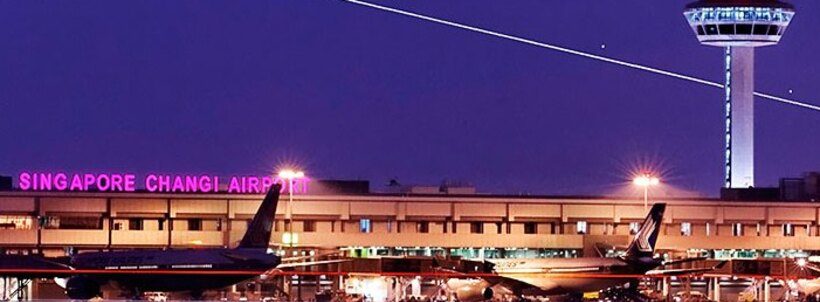
Singapore sets up collaborative initiative to support Asia-Pacific sustainable aviation
18 July 2025
The Civil Aviation Authority of Singapore (CAAS) has established the Asia Pacific Sustainable Aviation Centre (APSAC), a high-level organisation assembled to advance policy research, collaboration and capacity building. It has appointed former Singapore Airlines and IATA executive Philip Goh as its CEO, and established an advisory council including Airbus, Boeing, oil companies Chevron and ExxonMobil, IATA, renewable fuels producer Neste, and the Singapore government’s sustainable investment platform, GenZero. APSAC joins two other multi-stakeholder initiatives formed in Singapore over the past year to help foster SAF production in the APAC region. Meanwhile, global air cargo group DHL Express is to acquire 7,400 tons, or 9.5 million litres, of unblended SAF from Neste’s Singapore facility during the next 12 months.
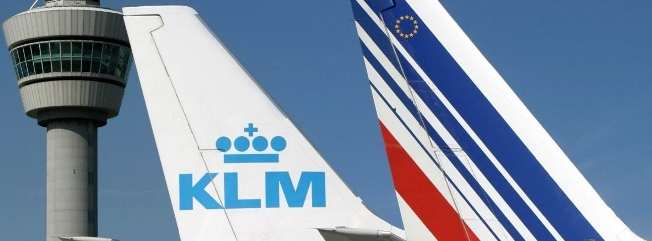
Air France-KLM becomes the first airline group to join the new EU flight emissions labelling scheme
17 July 2025
Air France-KLM has signed a cooperation agreement with the European Union Aviation Safety Agency (EASA) to partner on the implementation process of the new EU Flight Emissions Label (FEL), which aims to provide passengers with information on flight-related emissions, allowing them to make informed decisions when booking and comparing flights. The agreement with EASA provides for a structured framework for the two airlines to assess and test the EASA Flight Emissions Portal, the data reporting process and the administrative effort required. In turn, Air France-KLM agrees to supply emissions-related data. The voluntary labelling scheme was established under the ReFuelEU Aviation regulation adopted in 2023, with a European Commission implementing regulation following in December 2024. Airlines from both EU and non-EU countries covered by the ReFuelEU regulation can join the FEL. Air France-KLM has also signed an agreement with Airbus that enables the planemaker’s employees to reduce the impact of their business travel by supporting the development of sustainable aviation fuel. Through their booking tool, the employees can now select ‘SAF Bundles’ where the fares include a voluntary contribution towards the purchase of SAF that is directly embedded in the plane ticket.
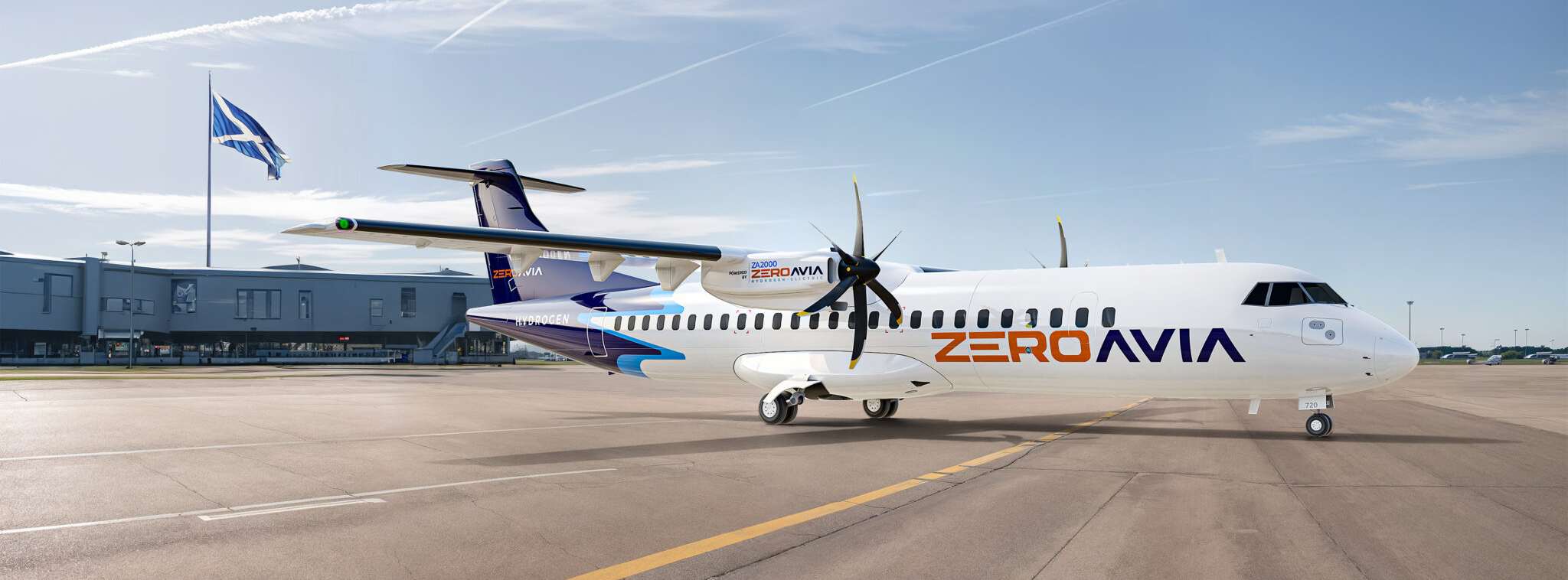
ZeroAvia intensifies UK activity, as it progresses certification of zero emission powertrains
16 July 2025
Hydrogen-electric propulsion developer ZeroAvia is advancing its activities across the UK as it awaits certification of its entry-level ZA600 zero-emission powertrain for 10-20 seat aircraft and develops the next programme, the ZA2000, for 40-80 seat commuter planes. The company has just secured a site near Glasgow, Scotland, to develop a manufacturing plant for its new fuel cell systems. It has also announced partnerships with two airlines, East Midlands-based RVL Aviation, to introduce hydrogen-electric powered cargo flights, and Loganair to explore the potential conversion of the Scottish regional carrier’s aircraft to zero emission propulsion. As well, the company has secured UK government funding to help develop and test a liquid hydrogen fuel management system, comprising a lightweight metallic tank design and associated systems for filling, storing and distributing the fuel as hydrogen-electric technology is increasingly applied to larger aircraft.

Carbon credit supply crunch puts CORSIA compliance by airlines at risk, warns report
15 July 2025
The airline industry is potentially facing a carbon credit supply crunch in respect of obligations under the First Phase of ICAO’s Carbon Offsetting and Reduction Scheme for International Aviation (CORSIA) that could derail the sector’s flagship carbon programme, finds a report by market intelligence firm Sylvera. With airlines required to purchase up to 144 million CORSIA-eligible emissions units (EEUs) by January 2028, only one host country (Guyana) has so far issued credits needed to meet this demand. EEU supply could therefore fall short by tens of millions. As a result of the shortage, credit prices could surge to $25-$36 or more – possibly as high as $60 – by 2027, with a cost to the sector ranging from $1.8 billion to $5.2 billion in the First Phase (2024-2026), comparable to the entire annualised value of the voluntary carbon market. Without swift regulatory and market action, CORSIA could fall into partial or even total non-compliance, warns Sylvera.

IATA brings together airlines and SAF suppliers on new procurement platform
10 July 2025
The International Air Transport Association (IATA) has launched the Sustainable Aviation Fuel Matchmaker platform to facilitate SAF procurement between airlines and SAF producers by matching requests for SAF supply with offers. When there is a match, airline and supplier can connect and take their negotiation offline to agree on specific terms including price and payment terms, says IATA. The SAF Matchmaker supports spot purchases and offtake agreements and is initially available to airlines and SAF suppliers only, although the industry trade body says other SAF buyers, such as non-aviation corporations, will also be able to participate in due course.
New Deloitte study for A4E finds Europe’s airlines at competitive risk over SAF mandate
9 July 2025
Current EU sustainability policy, in particular the ReFuelEU sustainable aviation fuel mandate, risks undermining European airlines’ competitiveness as well as sectoral decarbonisation goals by shifting passenger activity to non-EU destinations and carriers not subject to the same level of sustainability rules, finds a study carried out by Deloitte for industry advocacy group Airlines for Europe (A4E). The EU’s stricter environmental regulations could create additional market distortions, particularly on EU–Asia routes, because of widening cost gaps. In response, A4E calls on the European Commission to propose a series of policy measures to mitigate this, including a proposal for a SAF Border Adjustment Mechanism (SAF-BAM) that would charge connecting flights the same SAF-related costs faced by EU airlines.

COMMENTARY: US and international pressure got aviation a 13-year pass on climate – now the EU must end it
8 July 2025
The European Union has led the world in regulation to tackle climate change since the 1990s. The EU Emissions Trading System (ETS), which requires polluters to pay for their emissions, was a world first. It remains the cornerstone of the EU’s emissions reduction strategy and has paved the way for similar systems in countries spanning China, New Zealand, South Korea and Canada. Yet international aviation emissions are to this day exempt from ETS pricing despite their huge climate damage. The EU must now bring international aviation back under regulation, and stand up for its values and reaffirm its role as a global climate action leader, write Aoife O’Leary of Opportunity Green and Bastien Bonnet-Cantalloube of Carbon Market Watch.
Eight nations unite to propose taxing premium class fliers, sparking airline industry anger
7 July 2025
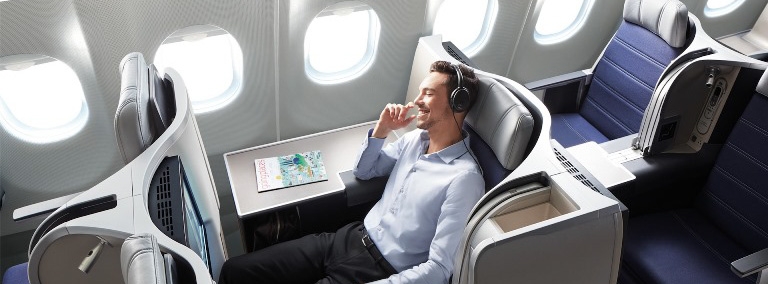
An eight-nation coalition has been formed with support from the EU and the Global Solidarity Levies Task Force (GSLTF) to propose a levy on premium air travel, as global scrutiny intensifies on climate damage caused by aircraft emissions. France, Kenya, Barbados, Spain, Somalia, Benin, Sierra Leone and Antigua & Barbuda announced their collaboration during the UN’s fourth International Conference on Financing for Development (FFD4), which has just concluded in Seville. Their initiative proposes levies on First and Business Class air tickets and private jet operations to help increase aviation’s contribution to mitigating the impacts of climate change, particularly in developing nations, and cites an estimation in a study by Netherlands-based environmental consultancy CE Delft, commissioned by the GSLTF, that levies could generate €78 billion ($90bn) per year. IATA has heavily criticised the move.


More News & Features
News Roundup August/September 2026
News Roundup July/August 2026
News Roundup June 2026
News Roundup May 2026
News Roundup April 2026
News Roundup March 2026