

The Civil Aviation Authority of Singapore (CAAS) has established the Asia Pacific Sustainable Aviation Centre (APSAC), a high-level organisation assembled to advance policy research, collaboration and capacity building. It has appointed former Singapore Airlines and IATA executive Philip Goh as its CEO, and established an advisory council including Airbus, Boeing, oil companies Chevron and ExxonMobil, IATA, renewable fuels producer Neste, and the Singapore government’s sustainable investment platform, GenZero. APSAC joins two other multi-stakeholder initiatives formed in Singapore over the past year to help foster SAF production in the APAC region. Meanwhile, global air cargo group DHL Express is to acquire 7,400 tons, or 9.5 million litres, of unblended SAF from Neste’s Singapore facility during the next 12 months.
Demand for air travel across the Asia-Pacific region is forecast to triple by 2045, said CAAS in announcing the formation of APSAC. “At the same time,” it added, “Asia-Pacific states are committed to climate action as an existential challenge and in support of ICAO’s Long Term Aspirational Goal of net zero carbon emissions for international aviation by 2050.”
The participation of such key advisory partners demonstrated both their commitment to achieving more sustainable air transport and their confidence that the group could achieve change in the Asia-Pacific (APAC) region, said Han Kok Juan, Director-General of CAAS, who will chair the board of APSAC.
“Asia-Pacific states want both growth and sustainability, not one at the expense of the other,” he said. “The new Centre answers the ‘how’ question and seeks to provide individual states a menu of policy options and instruments to advance their aviation sustainability goals, taking into account their respective national circumstances.”
Added APSAC’s Philip Goh: “Aviation sustainability is an urgent priority and I look forward to building up partnerships to work on regional projects and capacity-building programmes that can deliver tangible and meaningful outcomes for Asia-Pacific states.”
The agreement to form APSAC was signed in Singapore during the Global Aviation and Maritime Symposium, attended by the Secretaries-General of ICAO and the International Maritime Organisation (IMO) plus transport ministers, senior officials and global industry leaders, meeting to discuss both the challenges and opportunities in “a new global operating environment”.
Then, at a Roundtable on Advancing Sustainable Aviation, CAAS, the advisory council members and APSAC met ICAO Secretary-General Juan Carlos Salazar and more than 20 directors-general of civil aviation from across the APAC region to discuss national priorities and plans, and how the new organisation could support them.
Key measures include policy research by APSAC into measures including cleaner aviation fuels, carbon accounting, carbon market development and green financing.
In its first year, the group plans to engage with Asia-Pacific nations and civil aviation authorities on their needs and plans for more sustainable air transport, and how APSAC can support them.
It will also tap the private sector and academia for expertise and resources to support sustainable aviation initiatives.
As well, APSAC plans to start joint projects, studies and trials with multiple partners to support sustainable aviation policies across the vast region, and facilitate capacity-building programmes and conferences to enable aviation professionals to build and apply knowledge in their respective aviation authorities, and bring stakeholders together in sustainability partnerships.
IATA’s SVP Sustainability and Chief Economist, Marie Owens Thomsen, commented: “The Asia Pacific Sustainable Aviation Centre is a perfect example of the cross-cutting collaboration needed to help the region advance sustainable aviation through collaboration, policy research and capacity building. This is especially relevant as Asia-Pacific is expected to be the fastest growing region in terms of air traffic in the future.”
Julie Kitcher, Chief Sustainability Officer for Airbus, said APSAC “was exactly the kind of collective effort that is essential to drive meaningful progress,” while her Boeing counterpart, Brian Moran, indicated the initiative would collectively progress research and capacity building for sustainable aviation “in Singapore, the Asia-Pacific and beyond.”
Said Tahmid Mizan, ExxonMobil’s Global Regulatory Development Manager: “Market-forming policies that are technology-neutral and science-based are needed to reduce emissions from aviation while supporting the economic and societal benefits of rising air travel across Asia-Pacific.”
Chevron’s Singapore Chairman, Law Tat Win, said SAF had potential to reduce aviation emissions intensity while also supporting global energy requirements. “We look forward to collaborating with like-minded partners across the renewable fuels value chain to build capabilities in the region while meeting the world’s growing energy needs.”
“As the world’s leading sustainable aviation fuels producer, with our largest refinery here in Singapore, this is an opportunity for Neste to contribute to APSAC’s goals of promoting aviation sustainability in the Asia-Pacific region,” added Neste’s VP Sustainability and Public Affairs, Virpi Amoedo.
“As air travel demand in the Asia-Pacific continues to grow rapidly, advancing sustainable aviation is both a regional priority and a global imperative,” said Frederick Teo, CEO of GenZero, a sustainable investment platform established by the Singapore government’s global investment arm, Temasek.
“Scaling the production and adoption of sustainable aviation fuels is especially critical, given its potential to deliver deep emissions reductions within existing aviation systems. A successful transition glide path, however, requires bold policy support, coordinated investment and strong cross-sectoral collaboration.”
GenZero recently partnered with the World Economic Forum to establish Green Fuel Forward, an initiative to help increase the demand for SAF across the APAC region.
Founding members of the group include Temasek, Singapore Airlines, Air New Zealand, American Express Global Business Travel, Boeing, Chooose, Singapore-based carbon credit facilitator Climate Impact X, Singaporean banks DBS and UOB, International Energy Agency, Japanese bank Mizuho, Qantas Group, Roundtable on Sustainable Biomaterials, shipping operator Berge Bulk, Neste and global logistics group DHL.
Singapore is also home to the Asia SAF Association (ASAFA), an independent non-profit formed in November 2024 that is dedicated to advancing the adoption and integration of sustainable aviation fuel in the region. It has held conferences recently in Tokyo and Bangkok, and is hosting a number of webinars over the coming months.
Meanwhile, Neste has announced that it would provide 7,400 tons (9.4 million litres) of SAF to DHL Express at Singapore’s Changi Airport from this month until June 2026, for use in fuelling its five Boeing 777 freighters, which are operated on its behalf by Singapore Airlines on flights within Asia-Pacific and to the Americas.
The deal is the first by DHL for its 12 weekly B777 freighter flights from Changi, its South Asia hub, and is claimed by the companies to be one of the largest for air cargo operations in the Asia-Pacific region.
The SAF blend for the flights will be between 35% and 40% and will contribute to Singapore’s 1% SAF blending target for all passenger and freight flights from next year.
Christopher Ong, Managing Director of DHL Express Singapore, said the new deal with Neste was a significant milestone for his company.
“As one of the largest users of SAF globally, DHL Express is leading the way towards more sustainable logistics and driving voluntary demand for SAF adoption,” he said. “We are not just meeting industry standards but setting them.”
Carl Nyberg, Neste’s SVP, Commercial for Renewable Products, welcomed the opportunity to extend his company’s partnership with DHL. “It leverages our SAF production and supply capabilities in Singapore,” he said, “and demonstrates how we are working with DHL globally to help the company achieve its air transportation decarbonisation targets, using a solution that is available at scale today.”
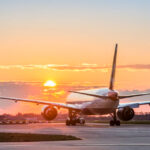
Photo: Singapore Changi Airport

Tony Harrington
Correspondent


More News & Features
Synthetic aviation fuel projects advance in Europe, Africa, US and China
Cathay Pacific trials Google’s AI-powered contrail avoidance technology across its network
Asian SAF supply and feedstock deals signed in China and Vietnam
Boeing signs MoU with state-owned Pertamina to explore SAF development in Indonesia
EcoCeres inks agreement with Hong Kong government to develop a SAF facility in China
International collaboration formed to develop ethanol and SAF project in Uzbekistan