






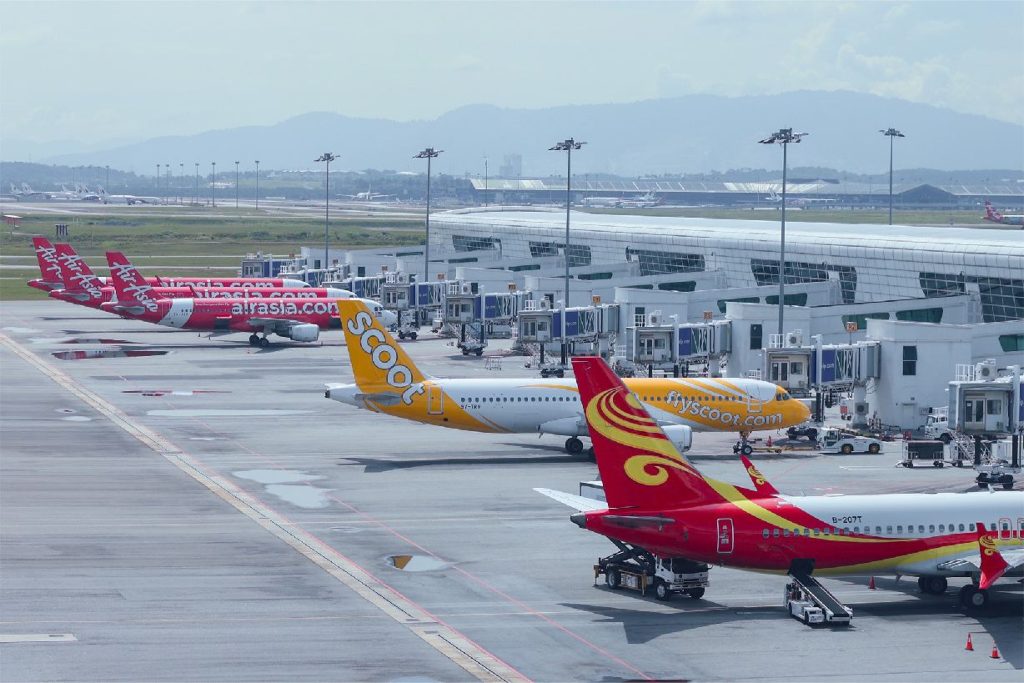
In less than 18 months, the aviation sector’s carbon offsetting scheme CORSIA is set to enter mandatory offsetting for airlines in 130 countries. According to IATA, the aviation industry is expected to offset an estimated 200 million tonnes of carbon dioxide, channelling $4-5 billion into carbon markets. This comes at a critical time, as the offsetting industry continues to recover from recent integrity crises. CORSIA was meant to drive a reset through more stringent standards. The aviation model was also expected to provide a blueprint for the maritime industry, as a harmonised mechanism to decarbonise cross border emissions. Yet, so close to kick-off, CORSIA finds itself at a crossroads, facing the biggest challenges to its viability since its conception. Surprisingly, these hurdles are being erected by the same governments that were instrumental in creating the scheme and fleshing it out over the last decade, writes AirAsia’s Yap Mun Ching.
Some of CORSIA’s supply issues are not new. Carbon markets have long grappled with information gaps surrounding its eligibility criteria. These criteria, first released at the end of October 2024, allowed just six emissions unit programmes to supply CORSIA credits (later increased to ten), alongside a long list of exclusions. That left only active projects – or projects already in the pipeline – with sufficient time to issue credits before the compliance deadline.
What is new, however, is the unexpected reluctance of many host governments to authorise qualifying credits for CORSIA use. Although developing countries were expected to issue the bulk of CORSIA supply, conventional supplying countries now face truncated availability of eligible credits due to tightened Phase 1 eligibility standards, slow market growth and rising domestic demand for credits to meet Paris Agreement NDC commitments. Even countries that voluntarily signed up to CORSIA to leverage the scheme for climate financing have dragged their feet. As a result, government authorisation has emerged as the primary constraint on credit supply.
As of mid-2026, analysts estimate that only about 100 million tonnes of credits are making their way towards full eligibility, raising the spectre that the industry will not have sufficient credits to meet the April 2028 compliance deadline.
The EU’s high-stakes review
Compounding matters is the EU review of CORSIA due in July that is sending ripples through carbon markets and causing project developers and airlines alike to press pause. Under European climate law, the EU must assess if the scheme meets two conditions: alignment with Paris Agreement goals and coverage of 70% of global emissions.
By timing its review just before CORSIA’s mandatory phase, the EU intended to create a regulatory ultimatum to compel ICAO to strengthen the aviation sector’s climate commitments and to pressure major developing economies – namely Brazil, Russia, India and China (BRIC) – to join early. Should the review find CORSIA lacking, the EU would expand its cap-and-trade system to cover all international departures.
However, this high-stakes move risks reopening a suspended dispute between the EU and these major economies, including the United States, which also strongly opposed a similar 2012 attempt to extend its ETS coverage to all international flights entering and departing the European Economic Area. By reopening this debate at a time when US participation in any climate accord hangs by a thread, the EU risks unravelling the very enterprise it spent millions to build through stacking ICAO working groups with its technical experts and funding capacity-building programmes worldwide to encourage voluntary participation in CORSIA.
A scheme under siege
Undoubtedly, CORSIA is flawed. European environmentalists decry the scheme for being too lax on a polluting industry, citing its lack of a penalty structure for non-compliance and the perceived “cheap” and “low quality” of offsets that allows the industry to defer more expensive in-sector solutions such as sustainable aviation fuels (SAF). Conversely, opponents such as China and India view the scheme as entrenching an inequitable framework that penalises developing economies that have yet to peak in emissions while protecting mature Western aviation markets that have far greater historical pollution. They also oppose a structure that allows the US and EU to dictate eligibility criteria to the point of excluding the bulk of carbon credits produced in their countries.
To take the critical view first, arguing that the scheme is too lenient fails to account for industry reality. Since CORSIA was adopted, the industry has faced at least two existential shocks. The pandemic left it grappling with supply chain problems, debt and fractured networks. Just as recovery seemed imminent, the war on Iran and subsequent blockade of the Strait of Hormuz sent jet fuel prices skyrocketing. Against this backdrop, the ‘delay’ in CORSIA offsetting was not due to any deliberate stalling but an actual drop in global emissions below the CORSIA baseline. In fact, the original CORSIA baseline had already been lowered by 15% to balance economic relief with environmental ambition.
The slow adoption of SAF stems less from CORSIA than problems within the SAF industry itself – from feedstock limitations, stalled technological developments and pricing inequities. Going by the prevailing orthodoxy, the UK and EU SAF mandates should have provided market certainty to increase supply and drive down prices. Yet, prices have remained stubbornly high, even escalating in tandem with jet fuel prices during the Hormuz crisis. This points to bigger market failures around SAF pricing that governments must fix, whether or not offsetting is available as an alternative.
CORSIA has also been caught in between competing legislative developments – the EU push for stronger action on one hand, and the Trump administration’s strident anti-environmentalism on the other. It has to perform a balancing act with protracted Paris Agreement negotiations, which delayed finalisation of its own rules, including qualifying criteria and double-counting provisions. The slow pace of credit authorisation must be viewed in this context. To authorise credits, countries must first ascertain their carbon inventories, plan for the long term, enact domestic legislations and develop procedures – no straightforward task for growing developing economies, especially those without pre-existing carbon pricing frameworks.
For an EU well into two decades of implementing its ETS, CORSIA may seem weak. But for many countries just embarking on carbon pricing, it has become the catalyst for economy-wide conversations about carbon pricing. It has also become the rationale for more countries to accelerate development of international credit transfer processes, potentially easing bilateral trades central to unlocking international climate finance under Paris Agreement Article 6. Without CORSIA and amid current economic crises, the likelihood of these countries pushing forward with carbon taxes and domestic carbon trading is low. Expansion of the EU ETS may net Brussels extra funds but it could come at the expense of lowering global ambition and preventing developing countries from accessing this legitimate channel for international climate financing to meet conditional NDC elements.
This is not to say that the EU should water down its climate ambitions. After all, CORSIA was always meant to be the floor, and not the ceiling, of the industry’s climate action. The EU can and has gone further, notably through its SAF mandate. It can apply the same principle to offsetting, except that the onus should be on Brussels to design domestic provisions that extend emissions coverage to its own carriers above CORSIA requirements and to apply to non-EU carriers insofar as it pertains to EU airspace – without crossing into extraterritorial application of its law. This would preserve CORSIA’s integrity and minimise objections from other countries.
Reforms needed for CORSIA
For all its perceived shortcomings, ICAO has achieved a harmonised scheme to a significant degree. Aside from the BRIC bloc, it has signed up all countries that meet the emissions threshold, including many that joined voluntarily despite being legally exempt. Unilateral EU imposition of its ETS on non-EU carriers would likely trigger retaliation, creating the very fragmentation that ICAO has fought against.
However, CORSIA does need reforms. Capacity building from donor states has to go beyond the basics to helping emerging countries put in place mechanisms to benefit from CORSIA. This includes crafting credible, high standard offsetting methodologies relevant to different regions that deliver impactful emissions reductions. ICAO programmes such as ACT-CORSIA should focus on creating relevant methodologies for lower-income countries to decarbonise their aviation sectors using technology and clean energy. This would be consistent with ICAO’s mandate to promote emissions units that benefit developing States, encourage domestic aviation-related projects, and ensure that international aviation is not targeted as a revenue source for climate finance to other sectors.
To ensure BRIC participation, CORSIA emissions unit criteria must allow programmes from different parts of the world to supply to the scheme as long as they meet the quality standards, without maintaining such rigidity towards Western-developed methodologies that exclude most but a handful of cookstove projects and safe drinking water projects.
Just as the EU conducts its review, CORSIA should also be reviewed for the fairness of its application on developed and developing countries. Applying the same sectoral growth factor for all regions of the world, as the scheme currently demands, forces emerging economies that have yet to recover to pre-Covid levels to compensate for affluent nations, particularly the EU and Gulf States. Unless addressed, this will compound the sense of injustice felt by developing countries being asked to meet the same obligations as historical major emitters.
Strengthening, not scrapping
The first priority is to allow the industry to begin its first offsetting round and address gaps iteratively, rather than demanding perfection from the outset. In the immediate term, this requires reaffirming confidence in CORSIA and encouraging more states to approve suitable credits within the compliance timeframe. Once Phase 1 is complete, ICAO can take action on the remaining critiques – whether the scheme should extend beyond 2035, whether quality standards can be further tightened, and whether the sectoral growth factor should be differentiated by region. Right now, the uncertainty created by the EU review is depressing credit prices and causing further paralysis at a time when the industry needs clarity most.
On the quality front, increasing rigour does not necessarily mean creating more rules – as the EU is attempting to do through the Paris Agreement Crediting Mechanism (PACM), which demands additional calculations that do not apply universally, particularly to complex nature-based solutions. The result will be further strangulation of methodologies to a handful of project types. Tellingly, one of the first methodologies PACM is issuing is another cookstove methodology – underscoring that improving quality is less about adding rules and more about interpreting conditions flexibly as they apply to different project types.
A multilateral approach remains essential. As an example, Thailand’s Premium T-VER standards, which was approved for CORSIA Phase 1 eligibility in 2025, includes new methodologies for waste management and mangrove restoration. Other organisations, such as the Malaysia Forest Fund, are seeking to develop nature-based methodologies that meet CORSIA’s technical standards, including its MRV, remedial and procedural requirements. These activities need room to grow without being cut off at the ankles.
Crucially, funds from the aviation industry should flow back into decarbonising aviation itself. Only then can market-based measures like CORSIA be consistent with ICAO’s preference for in-sector solutions. These could include methodologies that support overhauling antiquated air navigation systems in developing countries, leading to better global aviation efficiency and safety overall. Countries should also be allowed to issue credits for renewable energy transitions at rural airports, which, without climate financing, would never be prioritised. Indonesia, for instance, has over 300 rural airports that could benefit from such an approach. The sustainable solution to decarbonising the sector is not to dismiss offsetting as an out-of-sector distraction but to make it a viable in-sector solution too.
For better or worse, the international aviation sector stands at the threshold of implementing its first offsetting round. The choice now lies between allowing an imperfect scheme to proceed, filling its gaps as it develops, or taking a chance that a better system will rise from its ashes. To dismantle the only global framework available would not accelerate decarbonisation, it could well have the opposite effect.

About the author
Yap Mun Ching
Yap Mun Ching is the Chief Sustainability Officer of AirAsia. She chairs Malaysia’s CORSIA Task Force and is a technical expert with the ICAO Committee for Aviation Environmental Protection Working Group on CORSIA. Mun Ching also co-hosts Positive Altitude, AirAsia’s podcast on aviation sustainability.
Top photo: AirAsia
Views expressed in Commentary op-ed articles do not necessarily represent those of GreenAir.


More News & Features
News Roundup September 2026
EASA reports 2025 supplies of SAF exceeded first year of EU mandate
United and FedEx sign agreements to extend SAF supplies and scale up use
Transport NGOs call EU ETS aviation extension proposals a missed opportunity
Heathrow expansion incompatible with climate targets, advises UK government watchdog
Cathay Pacific trials Google’s AI-powered contrail avoidance technology across its network